Last updated November 21, 2026
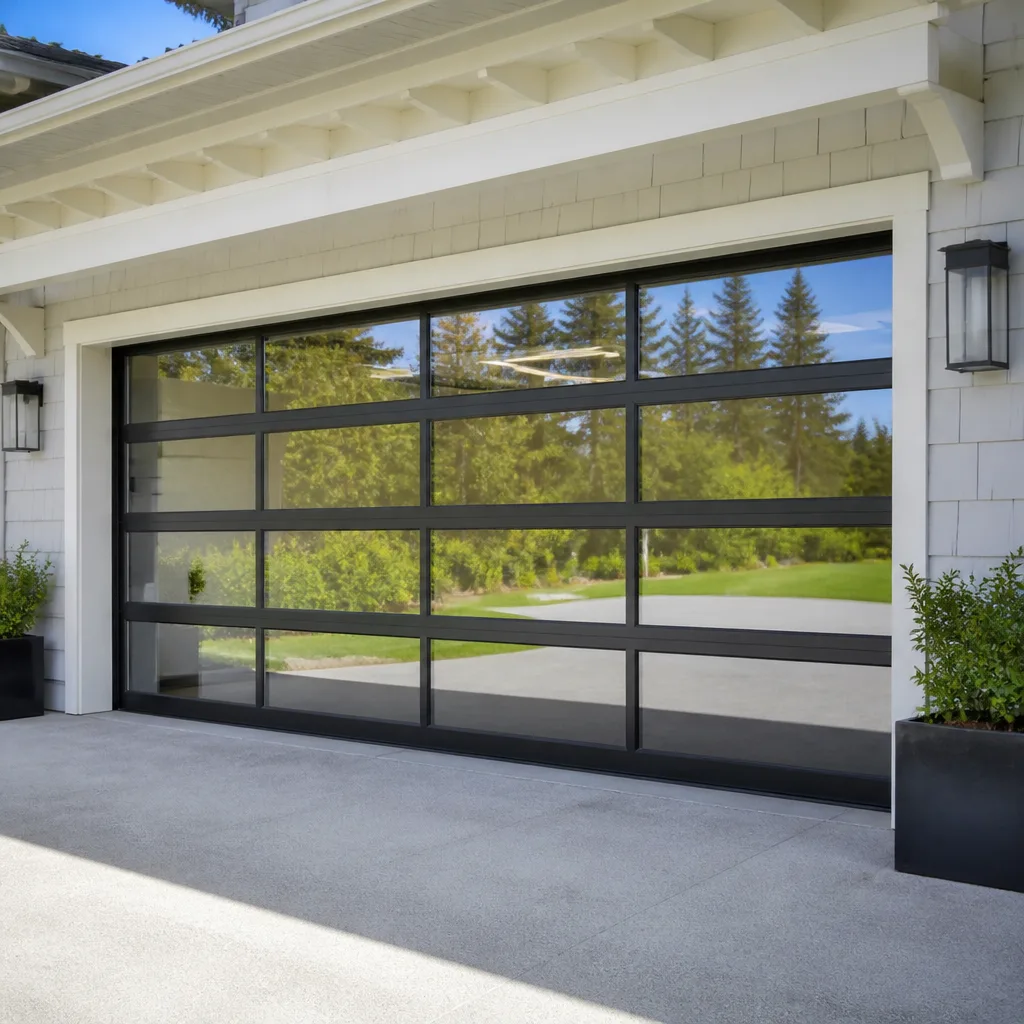 Full-view glass
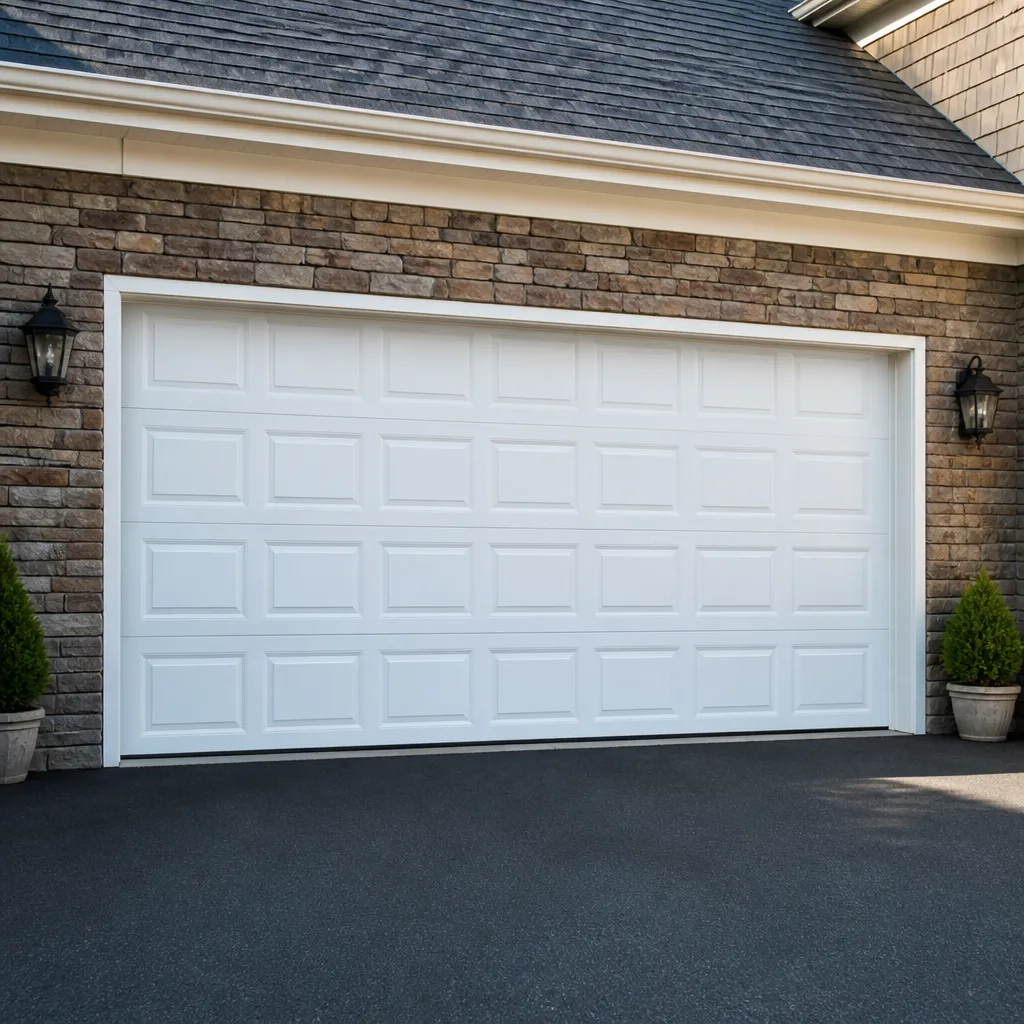 Raised-panel steel
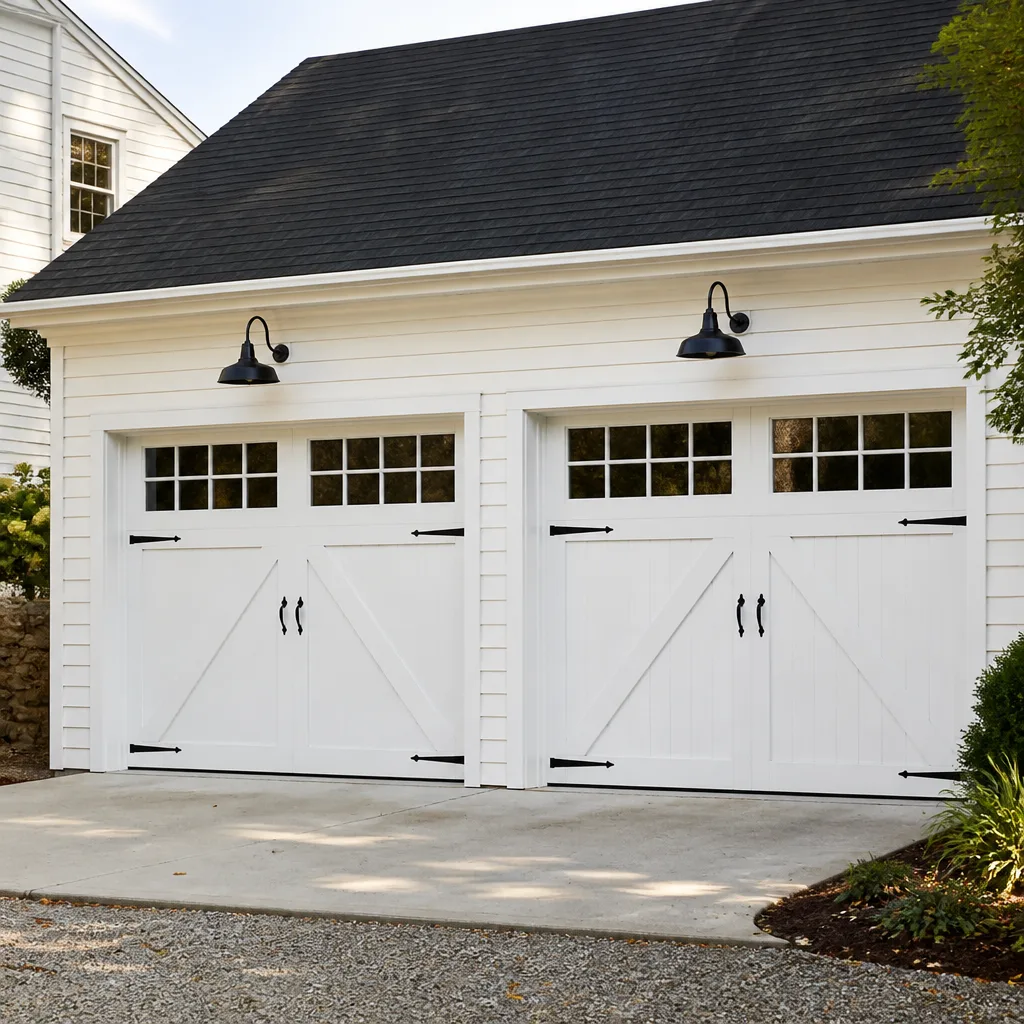 Carriage house
 Modern flush
 LiftMaster openers
 Chamberlain openers
Full 25-point door and opener safety check with every visit - springs, cables, rollers, tracks, and your LiftMaster or Chamberlain opener included
You get a price before we start. It does not change when the pro arrives.
Get your free estimateGarage Door Emergency Preparedness Guide for Riverview Homes
Most garage door advice assumes the emergency is mechanical: a snapped spring, a dead opener, a door hanging off its tracks. In Riverview, that’s only half the story. The emergencies that catch homeowners here tend to arrive with a name attached – a tropical storm, a hurricane warning, a flash flood watch – and the garage door is the one part of the house that has to work under both pressure and weather at once. A door that won’t close when a storm is lining up the Gulf is a different problem than a door that won’t open on a calm Tuesday. This guide covers both. You’ll learn how to release a door manually without getting hurt, how to test battery backup before season, what to do when a door is stuck open with weather coming, how the emergency call actually works, and how to document damage for an insurance claim afterward. Everything here is written for Riverview homes specifically, because the calendar here matters as much as the hardware. We’re Riverview Garage Door Repair Co, and this is the guide we’d hand a neighbor.
Quick Answer
A garage door emergency in Riverview is either mechanical (broken spring, dead opener, door off track) or weather-driven (a door that won’t close or open as a storm approaches). For mechanical failures, stop using the door, keep people and vehicles clear, and call for emergency service. For weather-driven failures, secure the opening first with manual release and temporary bracing, then get a technician scheduled. Either way, the manual release cord is your first tool, and knowing where it is before you need it is the single most useful thing you can do today.
Styles & brands we work with
- Raised-panel steel
- Carriage house
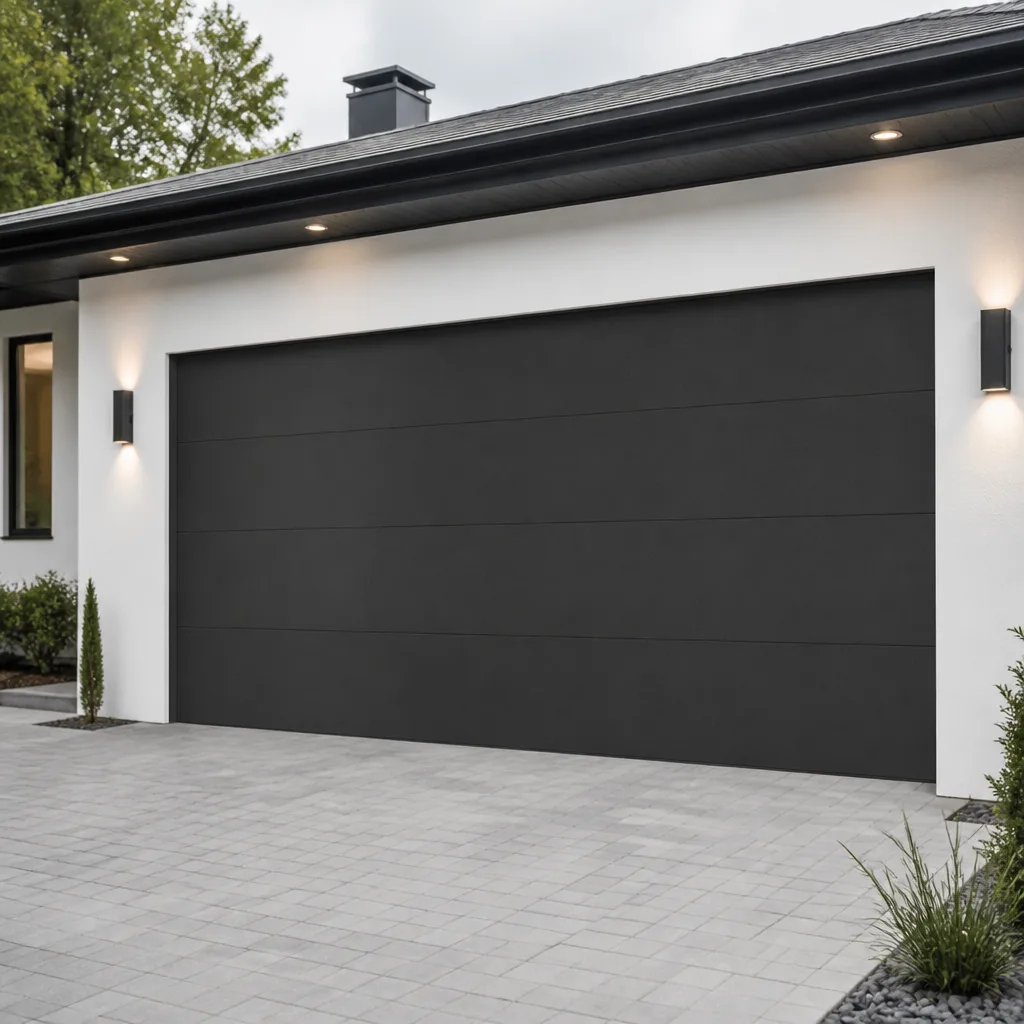
- Modern flush
- Full-view glass
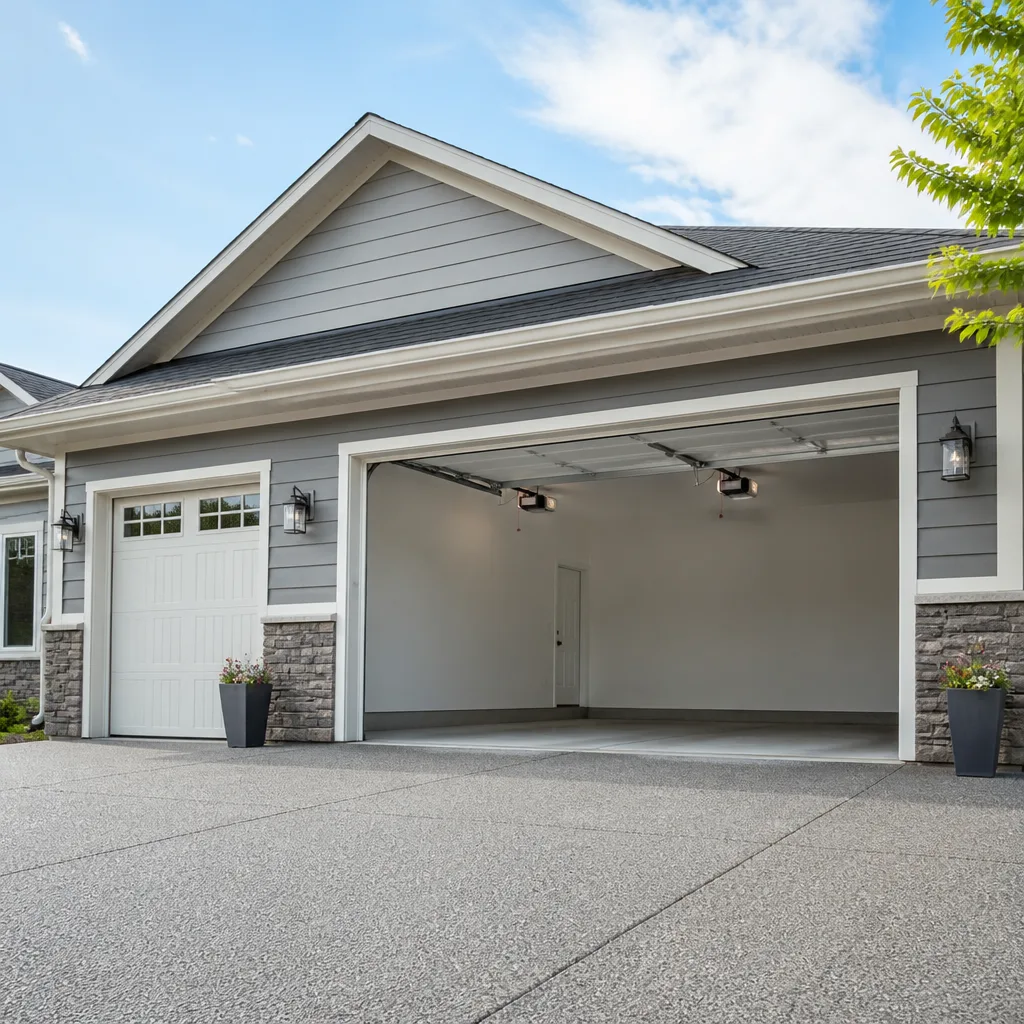
- LiftMaster openers
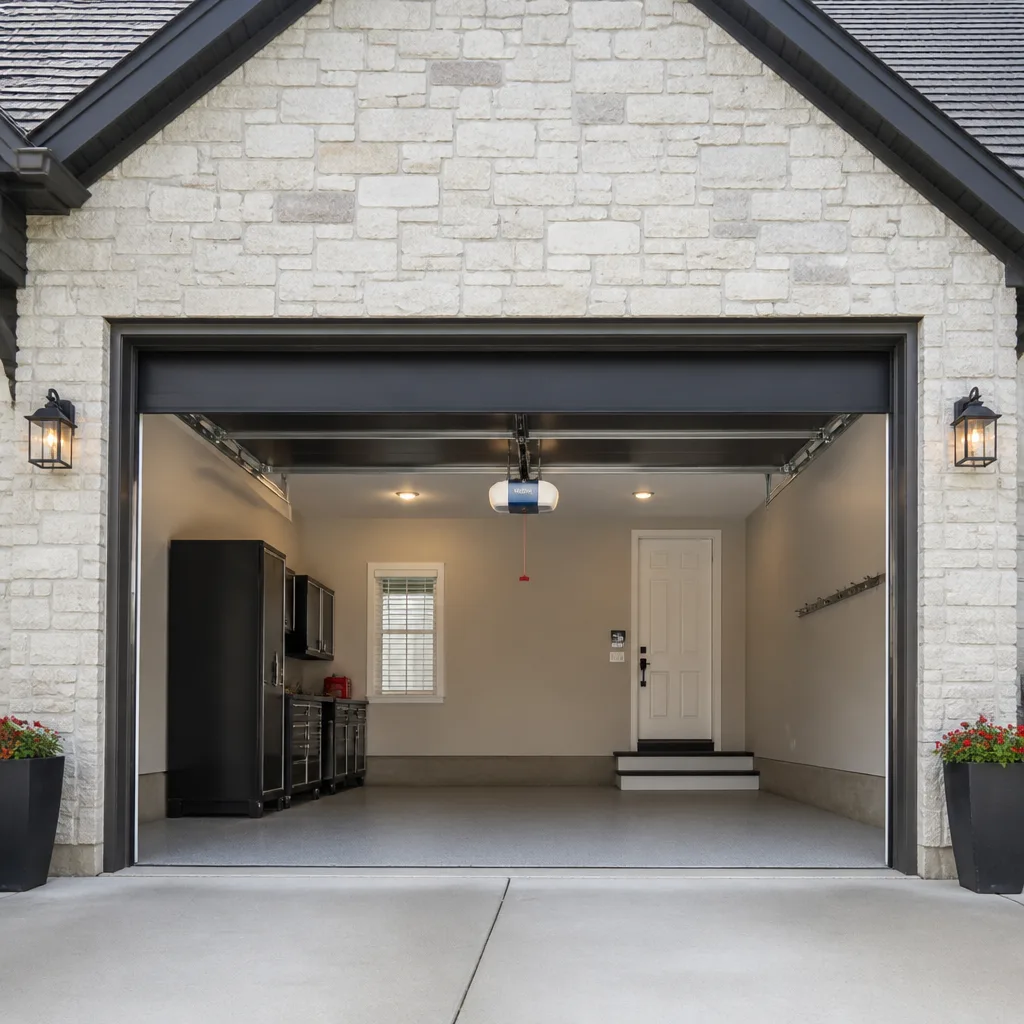
- Chamberlain openers
Table of Contents
- How do you use the manual release cord safely?
- Do battery backup openers hold up in Riverview humidity?
- What do you do when the door is stuck open and a storm is coming?
- How should Riverview homeowners prep before storm season?
- What happens on an emergency call, step by step?
- What should emergency service cost in Riverview?
- How do you document storm damage for an insurance claim?
- What if floodwater traps your car inside the garage?
How do you use the manual release cord safely?
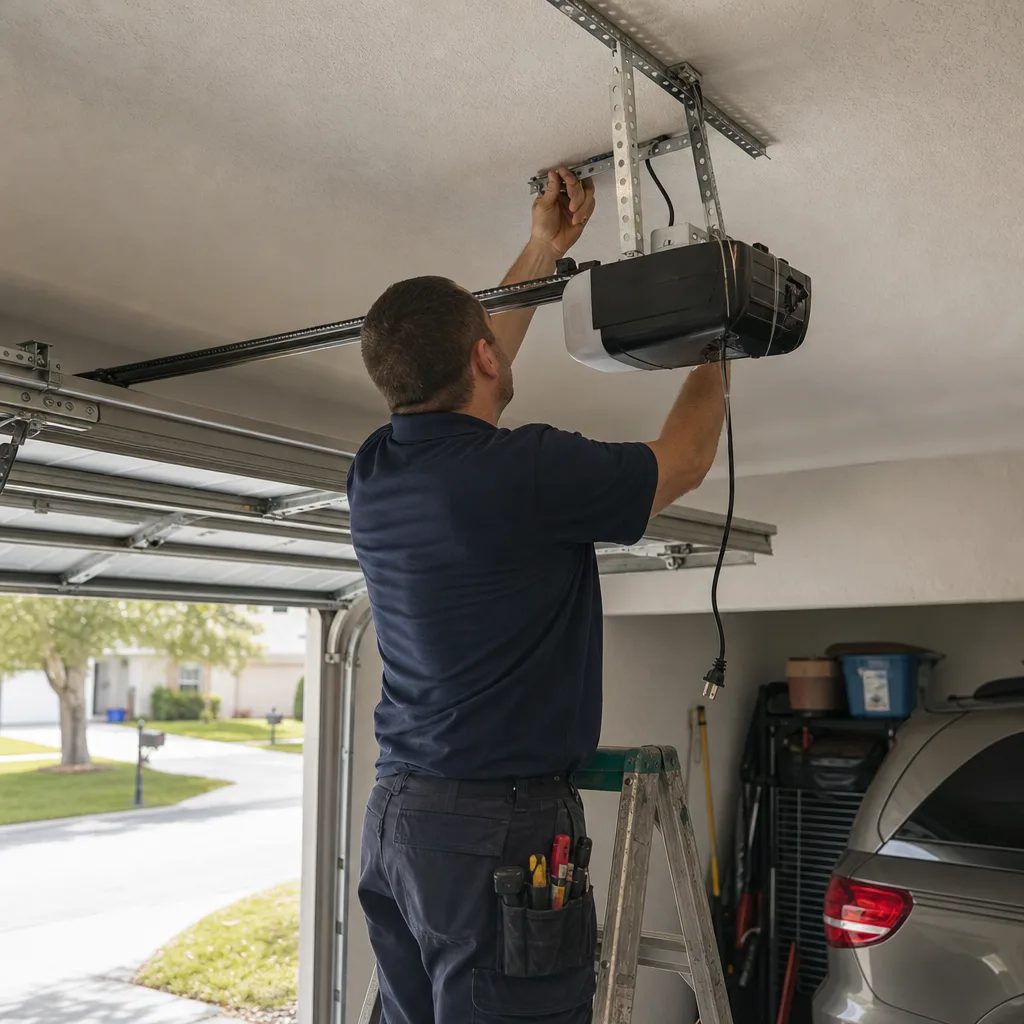
Pull the release cord only when the door is fully closed. That’s the short answer, and it’s the opposite of what most people do. The manual release disconnects the door from the opener so you can lift it by hand. If you pull it while the door is open or partway up, the door is being held by spring tension and the opener’s brake, and releasing it can let the door come down hard. On a door with a failing spring, that drop can be violent.
Here’s the sequence that keeps you out of trouble:
- Stand clear of the door’s path and make sure no one, including pets, is under it.
- Lower the door fully using the opener if it still works, or by hand if it’s already down.
- Pull the release cord straight down and toward the door. You’ll hear or feel the trolley disengage.
- Lift the door slowly by hand to test its weight. A properly balanced door lifts with one hand and stays put when you let go halfway up. A door that feels heavy or slams down is not safe to operate.
- Prop it only with proper bracing (more on that below) – never with a broom handle, a cooler, or anything that can slip.
To reconnect, close the door fully, then pull the cord again or run the opener until the trolley clicks back in. If the door won’t reconnect or feels wrong, stop. This is the point where a call makes sense. A door that won’t stay up by hand is telling you the springs are done, and garage door spring repair is not a job to improvise. We’ve seen what happens when a homeowner tries to help a tired spring along, and it’s the reason we treat spring work as its own dedicated service rather than a side task.
One Riverview-specific note: in the summer heat, the release cord and its handle can get stiff and brittle from sun exposure through an open garage. Give it a tug now and then so you know it moves freely. A cord that’s fused to the trolley when you need it is worse than no cord at all.
Do battery backup openers hold up in Riverview humidity?
Battery backup is the single best piece of storm prep you can buy for a garage door in Riverview, but only if the battery is actually healthy when the power drops. The feature lets the opener cycle the door a limited number of times after the grid goes down – enough to get a car out and the door closed again. What kills it is neglect. A backup battery that sits untested for a year in a hot, humid garage may hold a charge on paper and fail under load when it counts.
Not every opener has backup, and not every brand handles it the same way. If you’re shopping or checking what you own, here’s what to look at:
- LiftMaster and Chamberlain both offer backup units that use a replaceable battery and include a test button on the motor head. These are common in Riverview homes and easy to check once you know where the button is.
- Craftsman legacy openers vary widely – some have backup, many older units don’t. Check the model plate on the motor housing before assuming.
- Raynor openers and operators are less common on residential doors but do turn up on newer builds. If you have one, the manual will tell you whether backup is part of the package.
Testing is simple: with the door closed, unplug the opener from the wall (or trip the breaker) and press the wall button. The door should cycle on battery power. Plug it back in and note how it behaved. Do this before storm season, not during a warning. If the door moves slowly or stalls, the battery is tired and needs replacing.
Humidity is the other factor. A garage in Riverview stays warm and damp for much of the year, and battery terminals corrode faster than they do in drier climates. A quick visual check for crusty white buildup on the terminals, plus a wipe with a dry cloth, goes a long way. If your opener is older and has no backup at all, that’s a fair reason to talk about replacement rather than repair. Garage door opener repair can fix a dead unit, but it can’t add a feature the motor never had.
What do you do when the door is stuck open and a storm is coming?
Get the door closed by hand if you safely can, and brace the opening if you can’t. A garage door stuck open during a storm is an open invitation for wind-driven rain, debris, and – depending on the storm – pressure changes that can damage the door panels or the tracks. The goal isn’t a perfect seal. It’s reducing the opening and keeping the door from becoming a sail.
Work through this in order:
- Try the manual release. Disconnect the opener and lower the door by hand. If it comes down smoothly and stays down, you’re done – leave it disconnected until a technician can look at the opener.
- If the door won’t come down because of a broken spring or a bent track, don’t force it. Forcing a door with a failed spring can bend panels, pop the track off the wall, or injure you.
- Brace the opening from the inside with what you have. A piece of plywood cut to fit the opening and wedged or screwed across the frame is the standard approach. Heavy furniture pushed against the door from inside is a fallback, not a fix – it won’t stop wind-driven rain but it will discourage the door from flapping.
- Move anything valuable – tools, boxes, a car – away from the opening and off the floor.
- Call for emergency service if the door is off its tracks or the spring is visibly broken. This is the point where waiting until the storm passes can turn a repair into a replacement.
We want to be clear about the spring caveat because it’s the one people get wrong. The springs, cables, and brackets under tension at the top of your door store enough energy to cause serious injury, and the torsion spring on many Riverview doors is under hundreds of pounds of load. Never try to prop, lift, or “help” a door with a broken spring into the closed position by hand while standing under it. If the door is down and staying down, leave it. If it’s up and won’t come down safely, brace the opening and call.
One more thing worth doing now rather than later: figure out which direction your garage opening faces. In Riverview, west-facing garage doors take the afternoon sun and the wind-driven rain that comes with summer storms, and the seals and bottom weatherstripping on those doors wear faster. If your door faces west, check the bottom seal before season and replace it if it’s cracked. A tight seal won’t stop a hurricane, but it keeps ordinary summer storms out of your garage.
How should Riverview homeowners prep before storm season?
Storm prep for a garage door takes about fifteen minutes and pays off the first time the power goes out. The Atlantic hurricane season runs from June through November, and Riverview sits close enough to the coast that a storm tracking up the Gulf can bring wind and flooding rain even when the eye stays offshore. You don’t need to prepare for a direct hit every year. You do need to prepare for the power outage and the wind-driven rain that come with almost every named storm that brushes the area.
Run through this checklist once before June and again in late summer:
- Find and test the manual release cord. Pull it with the door closed, then reconnect. If it’s stiff or stuck, get it freed up now.
- Test the battery backup. Unplug the opener, cycle the door, plug it back in. Replace the battery if the door moves slowly or stalls.
- Look at the springs. A visible gap in a torsion spring, or a stretched, gapped extension spring, means it’s on its way out. Don’t wait for it to fail mid-storm.
- Check the tracks and rollers. Tracks should be straight and plumb. Rollers should turn freely. A track that’s already loose will be worse after a windy night.
- Inspect the bottom seal and side weatherstripping. Cracked rubber lets rain in and, over time, rots the bottom section of the door.
- Clear the area in front of the door. Storm debris piled against the door or in the track is a common cause of a door that won’t close.
- Know your opener’s brand and model. Write it on a note and stick it inside the garage. When you call for service, that number tells the technician what parts and knowledge to bring.
The brand note matters more than it sounds. We service equipment from LiftMaster, Chamberlain, Genie, Clopay, Amarr, Wayne Dalton, Craftsman, and Raynor, and knowing the exact model up front means the technician arrives already familiar with the hardware on your door instead of guessing. It also means fewer trips and a faster fix, which is what you want when a storm is two days out.
Finally, decide in advance where the car goes if the door won’t open. If your only vehicle is inside the garage and the opener dies during a warning, you need to know you can release the door by hand and get out. Practice it once on a calm day. The manual release is a skill, not a piece of trivia.
What happens on an emergency call, step by step?
An emergency call goes fastest when you have four things ready before you dial: the address, the door’s brand and model if you know it, what the door is doing (won’t open, won’t close, off track, loud bang), and whether anyone is trapped or a vehicle is blocked. Have those in hand and the call takes two minutes instead of ten.
Here’s how the process typically runs:
- You call and describe the failure. The dispatcher asks what the door is doing and what you’ve already tried – manual release, breaker, wall button. Answer honestly; if you’ve forced the door, say so. It changes what the technician brings.
- You get a service window and an estimate range. Emergency work is priced per job, and the range you hear on the phone is an estimate, not the final number. The written quote on site sets the price, and you agree to it before any work starts.
- The technician arrives and diagnoses. Most emergency calls come down to one of three things: a broken spring, a failed opener, or a door that’s jumped its track. A good technician confirms the cause before quoting.
- You get a written quote. Ask what’s included – parts, labor, disposal of the old spring – and whether anything else on the door is close to failing. You approve or you don’t.
- The repair happens. Spring replacement, opener repair, and track realignment are all common same-visit fixes. If a part has to be ordered, you’ll be told when it’s coming and what to do with the door in the meantime.
Two questions worth asking the dispatcher: “Is this something I should stop using the door over?” and “What should I do with the door until you arrive?” The answers keep you and your family safe in the gap between the call and the visit. If a car is trapped inside and you need it out, say that up front – it changes the priority.
Our technicians have up to 8 years of experience, and emergency work is a core part of what we do, not an after-hours upsell. If your door fails, call (866) 521-4006 and we’ll get you booked. If you’re not sure whether it’s an emergency, call anyway and describe it. A stuck door at 10pm is worth a conversation.
What should emergency service cost in Riverview?
Emergency garage door service in Riverview typically runs higher than a scheduled repair because of the after-hours call, and the honest range depends on what failed. A broken spring is the most common emergency and the most expensive single repair on a residential door. A dead opener is usually cheaper. A door off its tracks falls somewhere in between, depending on whether the tracks and panels survived.
Here’s how the typical estimates break down. These are ranges, not quotes, and the written estimate on site sets the final price:
- Emergency spring replacement (one spring): roughly $220 to $400, depending on spring type and door weight. A matched pair is usually replaced together, so a pair runs about twice that.
- Emergency opener repair: roughly $150 to $350, depending on whether it’s a motor, a logic board, a safety sensor, or a gear assembly.
- Off-track door realignment: roughly $150 to $300 if the tracks and panels are intact. Bent panels push it higher.
- After-hours emergency call fee: often a separate line item on top of the repair, and worth asking about on the phone.
What you should not accept is a number that changes after the work starts. Ask for the written quote before anything is touched, and ask what’s included. A reputable technician will tell you if a cheaper repair will do or if replacement makes more sense. If a company won’t put the price in writing before starting, that’s your answer.
For non-emergency work, the numbers come down. A scheduled garage door repair during normal hours is typically less than the same job at night, and a tune-up that catches a tired spring before it snaps is cheaper than an emergency replacement. That’s the whole argument for the seasonal checklist above: the cheapest emergency is the one you prevent. Call (866) 521-4006 for a free estimate – we’ll give you a range on the phone and a written price on site.
How do you document storm damage for an insurance claim?
Photograph the damage before you touch anything, and include something in the frame that shows scale and location. Adjusters see hundreds of claims after a storm, and the ones that move fastest have clear, dated photos taken before cleanup. Your phone’s camera is enough. What matters is the sequence and the detail.
Here’s the documentation routine that works:
- Photograph the whole door first, then the damage close up. Wide shot, then detail. Include the garage opening and the surrounding wall so the adjuster can see where the door sits on the house.
- Photograph the damage from more than one angle. A bent panel looks different from the front than from the side, and a dented track is easier to see from below.
- Note the date and time the damage happened or was discovered, and the storm it’s tied to. Timestamps on phone photos help.
- Save any debris – a piece of the door, a broken spring, a torn seal – in a bag and photograph it with the door in the background.
- Get the repair estimate in writing and keep it. The estimate is the document the claim gets built on, and it should list parts, labor, and the reason for the repair.
- Don’t discard the old parts until the claim is settled. Adjusters sometimes want to see them.
The language adjusters look for is specific: what failed, why, and what it costs to put right. “The door won’t close” is less useful than “the bottom panel is bent and the left track is out of plumb after wind-driven debris, and the door will not close.” A written estimate that spells out the failure and the fix does most of that work for you. Ask the technician to note the cause on the estimate.
If the damage is storm-related, call your insurer before you schedule the repair so you know what they need. If the door is unsafe to operate in the meantime, say so – most insurers understand that a door that won’t close is a security issue and a repair that can’t wait. A garage door repair estimate written up clearly is the document that gets the claim moving.
What if floodwater traps your car inside the garage?
Don’t drive through standing water to get the car out, and don’t wade into a garage with water above your ankles. Riverview gets heavy rain during summer storms, and a garage floor that’s a few inches deep can hide a live electrical connection, a slick surface, or a step you don’t see. The car is replaceable. You aren’t.
If the water is shallow and rising slowly, the priority order is people first, then the door, then the car. Get everyone out of the garage and to higher ground. Then, if it’s safe to do so, release the door manually with the door closed and lift it by hand – but only if the water is below the bottom seal and you’re not standing in it. If the water is already inside the garage, leave the door alone. Opening it lets more water in and puts you in the path of a door that may be waterlogged and heavy.
After the water recedes, don’t run the opener until the motor and the wall button have dried out and been checked. Water in the motor housing or the logic board is a common cause of a dead opener after a flood, and running it wet can turn a repairable board into a replacement. Same for the safety sensors at the bottom of the tracks – they sit low and take on water first. If the door won’t close after a flood, the sensors are the first thing to check, and a technician can tell you in minutes whether it’s the sensors or something deeper.
If your car is trapped and the water is rising, call for help first. A garage door emergency is a door problem. A flood is a life-safety problem, and the door can wait until the water does what it’s going to do.
Common Mistakes to Avoid
- Pulling the manual release with the door open. The release is meant to be used with the door fully closed. Pulling it while the door is up can send it down hard under spring tension. Close the door first, every time.
- Assuming the battery backup works because the light comes on. A backup battery can show a green light and still fail under the load of lifting the door. Test it by unplugging the opener and cycling the door, not by looking at the indicator.
- Propping an open door with whatever’s handy. A broom handle, a cooler, or a stack of boxes can slip and let the door come down. If you must brace an opening, use something fixed to the frame, and only when the door is already down or the spring is intact.
- Forcing a door with a broken spring. Pushing, lifting, or “helping” a door whose spring has failed puts you under a load that can injure you badly and bends panels that were fine. Stop and call.
- Waiting until the storm is named to test anything. The week before a warning is when everyone calls. The calm weeks before June are when a fifteen-minute check actually happens.
- Throwing away the old parts before the claim is settled. Adjusters sometimes want to see the failed spring or the bent panel. Keep them until the claim closes.
- Running the opener after floodwater got into the motor. A wet logic board that gets powered up can fail outright. Let it dry and get it checked first.
- Ignoring a door that’s getting harder to lift by hand. A door that used to lift easily and now feels heavy is telling you the springs are losing tension. That’s a scheduled repair now or an emergency later.
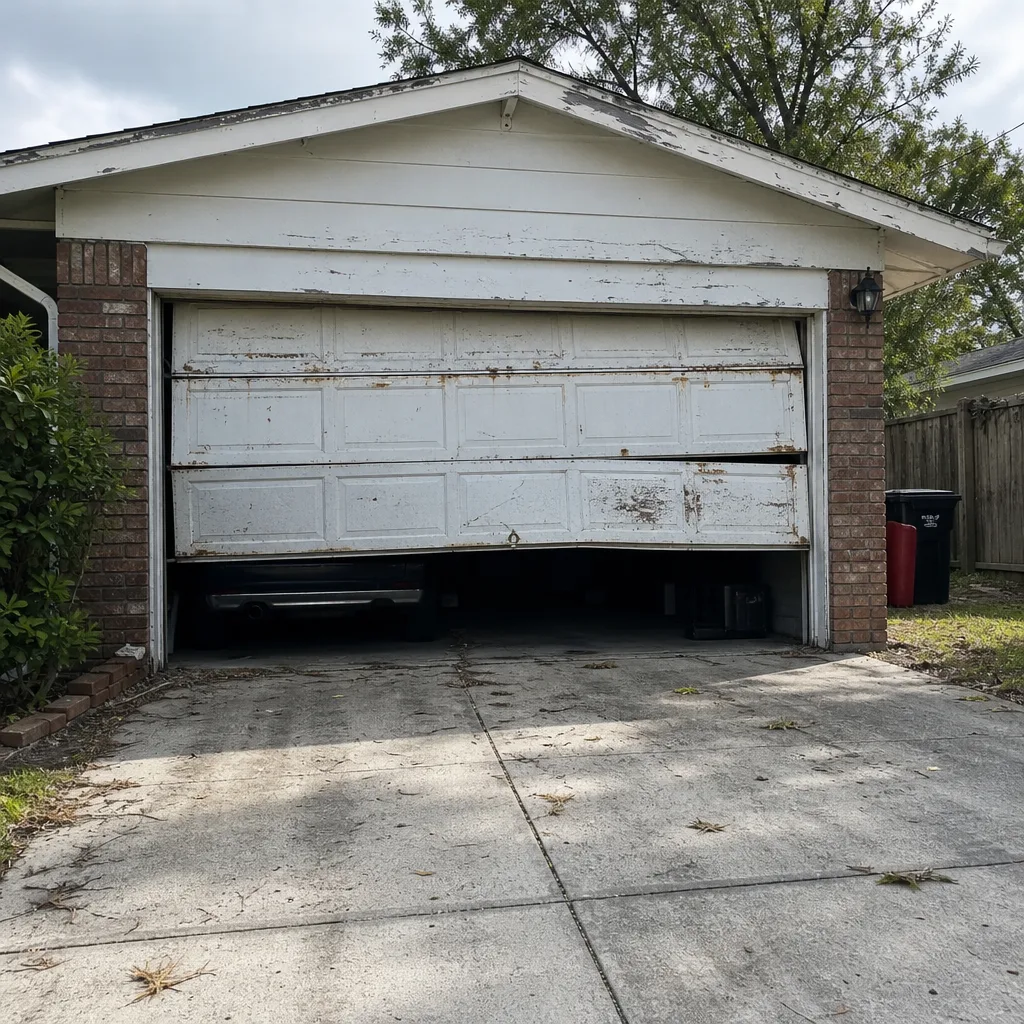
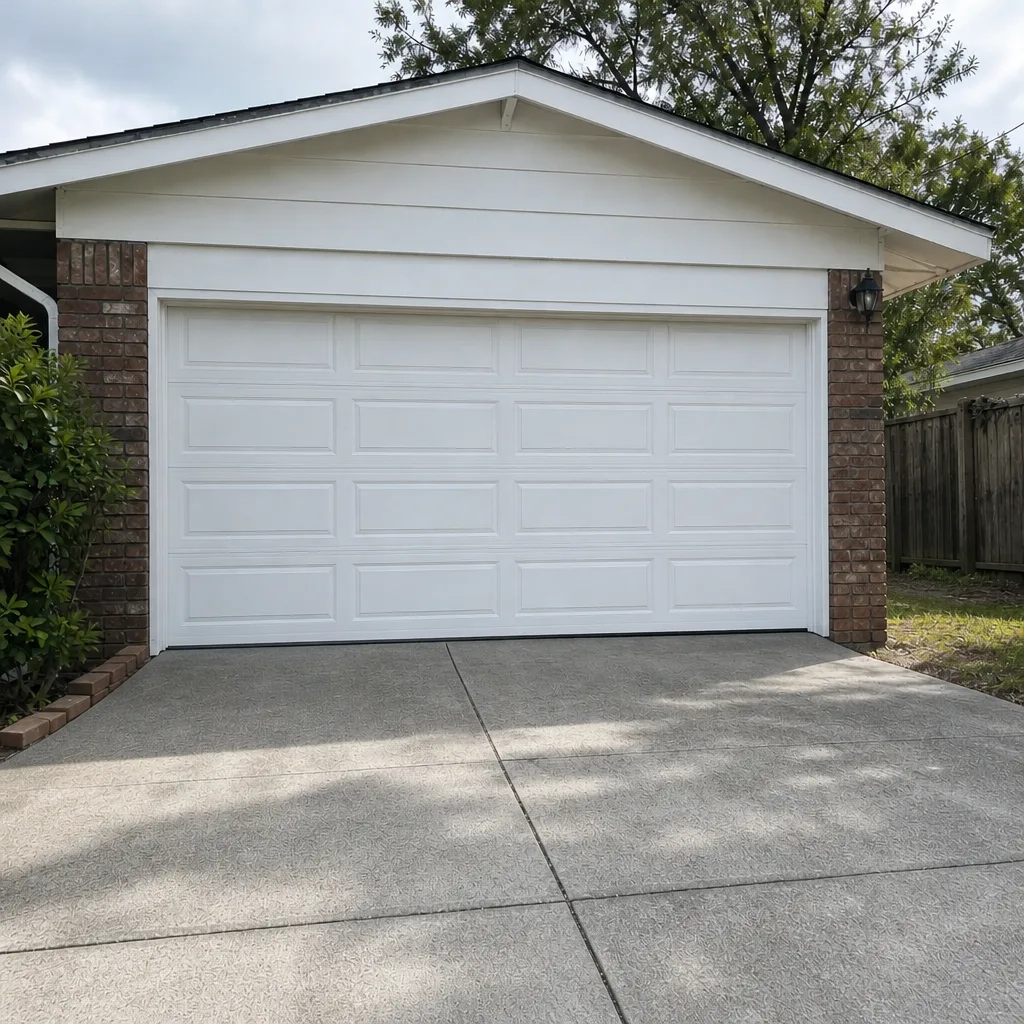
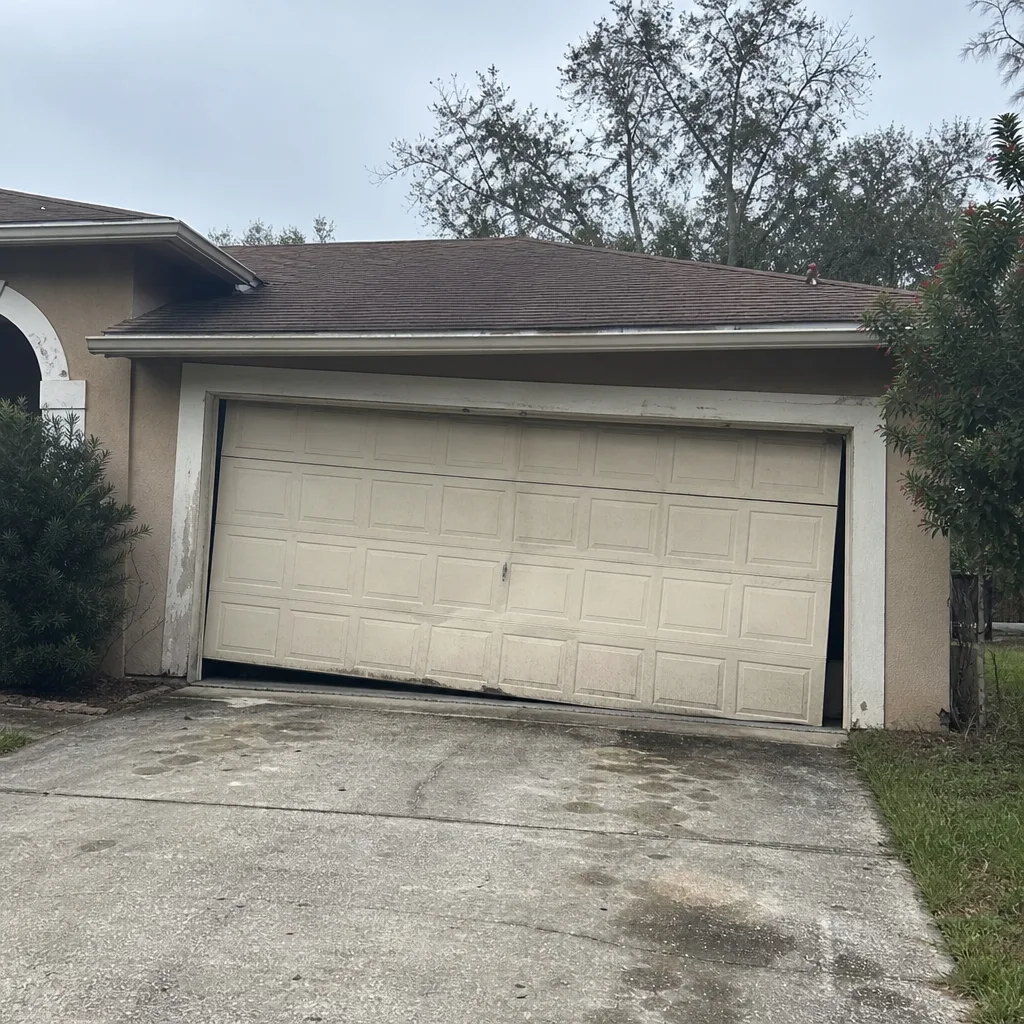
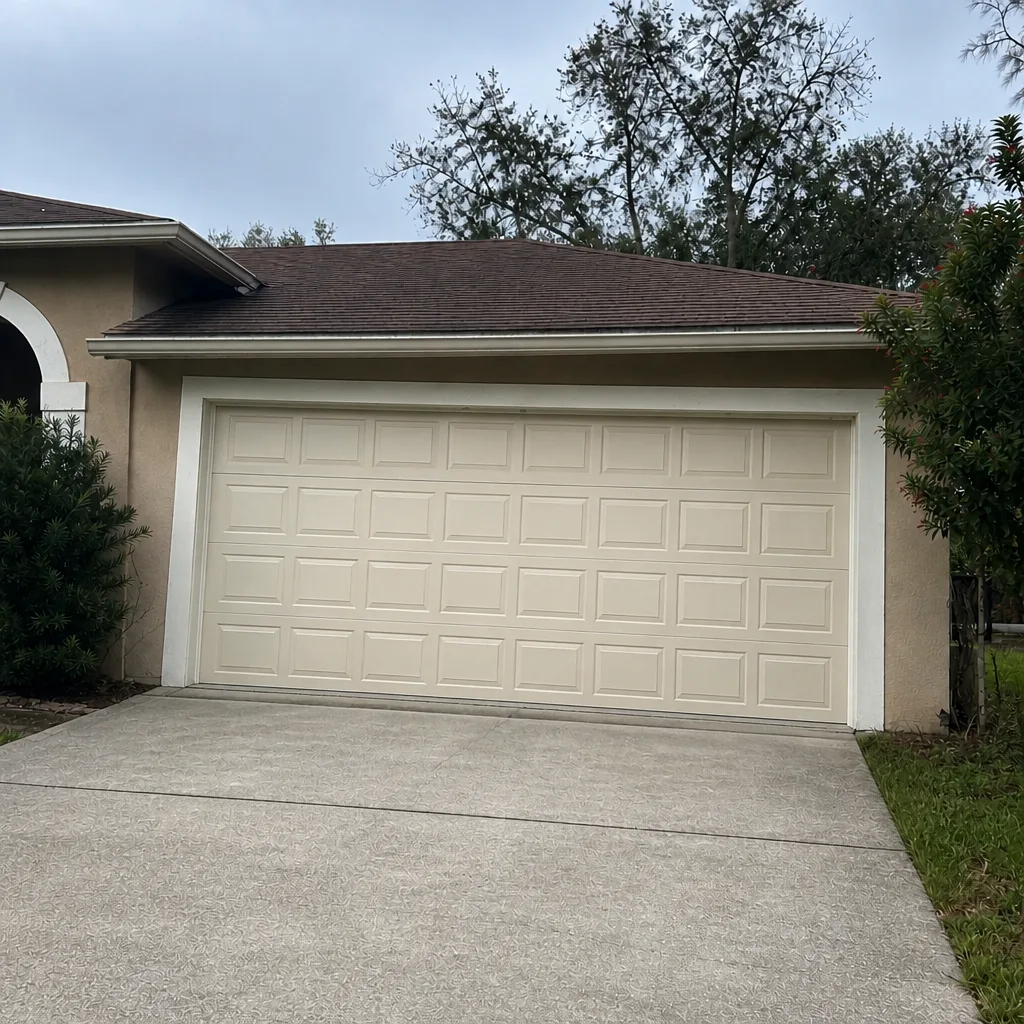
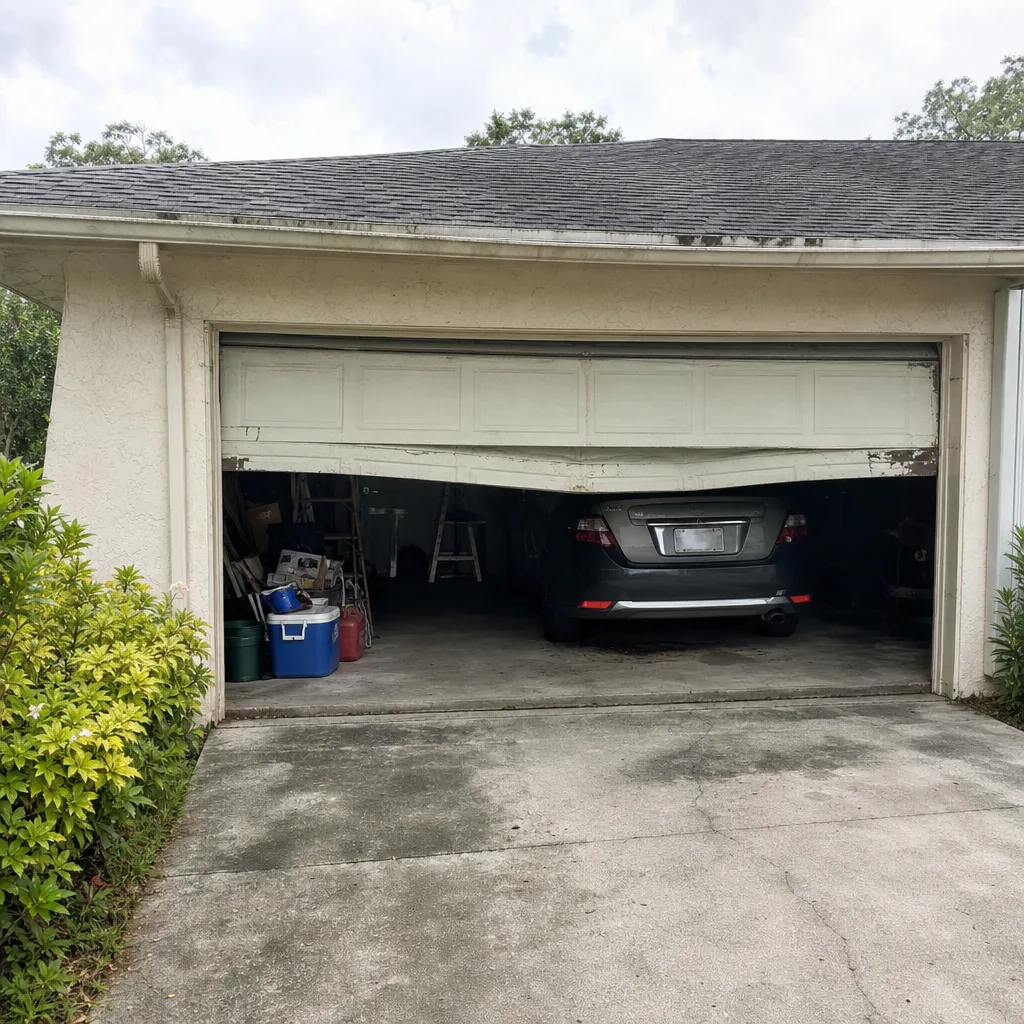
See the difference
 Before
 After
 Before
 After
 Before
 After
When to Call a Professional
Call for help when the door won’t close and a storm is coming, when a spring is visibly broken or the door won’t stay up by hand, when the door is off its tracks, when the opener runs but the door doesn’t move, or when floodwater has gotten into the motor or the safety sensors. Call immediately if a car is trapped inside and you need it out. Don’t call a professional for a remote that needs a battery or a door that’s simply dirty in the tracks – those are homeowner fixes.
If you’re on the fence, call and describe it. A two-minute conversation tells you whether it’s an emergency or a scheduled repair, and it costs nothing to ask. Riverview Garage Door Repair Co offers free estimates in Riverview – call (866) 521-4006. We work on LiftMaster, Chamberlain, Genie, Clopay, Amarr, Wayne Dalton, Craftsman, and Raynor equipment, so the technician arrives already familiar with your door. Emergency service is part of what we do, not an afterthought.
Frequently Asked Questions
Close the door fully, pull the release cord straight down to disconnect the opener, then lift the door by hand. Only do this when the door is closed – pulling the release with the door open can let it drop under spring tension. If the door feels heavy or won’t stay up, stop and call; that’s a spring problem, not a power problem.
In most cases, yes. Emergency garage door service is a core offering, and same-day response is the goal for doors that won’t close, won’t open, or are off their tracks. Call (866) 521-4006, describe what the door is doing, and you’ll get a service window and an estimate range on the phone. The written quote on site sets the final price.
No, not without your approval. The range you hear on the phone is an estimate; the technician diagnoses the door on site and gives you a written quote before any work starts. You agree to that number before anything is touched. If the diagnosis turns up something else, you’ll hear about it and you decide.
The local professional who performs the work is licensed and insured as Florida requires, and we connect you with that vetted local pro. You can ask to see credentials on site. Our technicians have up to 8 years of experience, and the work is quoted and agreed before it starts.
Try the manual release with the door closed and lower it by hand. If it won’t come down because of a broken spring or a bent track, don’t force it – brace the opening from the inside with plywood or heavy furniture and call for emergency service. Move anything valuable away from the opening and off the floor.
Yes, if the battery is healthy. A backup unit cycles the door a limited number of times after the grid goes down, which is enough to get a car out and the door closed. Test it before storm season by unplugging the opener and cycling the door on battery power. If it moves slowly or stalls, replace the battery. Call (866) 521-4006 if your opener has no backup and you want to talk about options.
Emergency spring replacement typically runs roughly $220 to $400 for one spring, with a matched pair running about twice that. After-hours call fees are often a separate line item, so ask on the phone. The written estimate on site sets the final price, and you approve it before work starts. Call (866) 521-4006 for an exact quote – estimates are free.
The Bottom Line
A garage door emergency in Riverview has two faces: the mechanical failure and the weather event. The mechanical failure – a snapped spring, a dead opener, a door off its tracks – is what the manual release cord and a clear head get you through safely, provided you use the release with the door closed and stop when the door feels wrong. The weather event is what the seasonal checklist prevents: battery backup tested, springs inspected, seals checked, opening braceable if it comes to that. Neither is complicated. Both reward doing the fifteen minutes of prep before the season rather than during it. Know where your release cord is, know your door’s brand, and know who to call. Call (866) 521-4006 for a free estimate in Riverview – we’ll help you get back up and running.
Written by the team at Riverview Garage Door Repair Co.