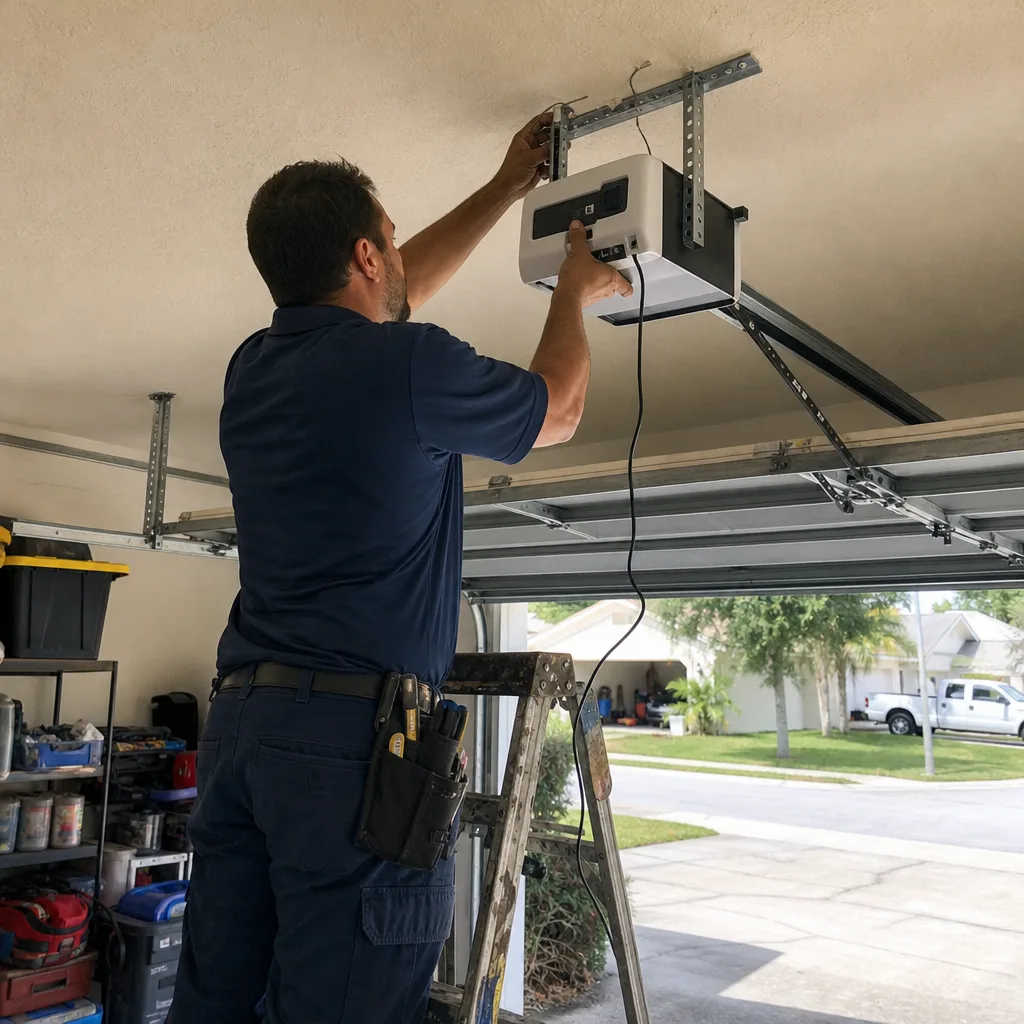
Last updated November 21, 2026
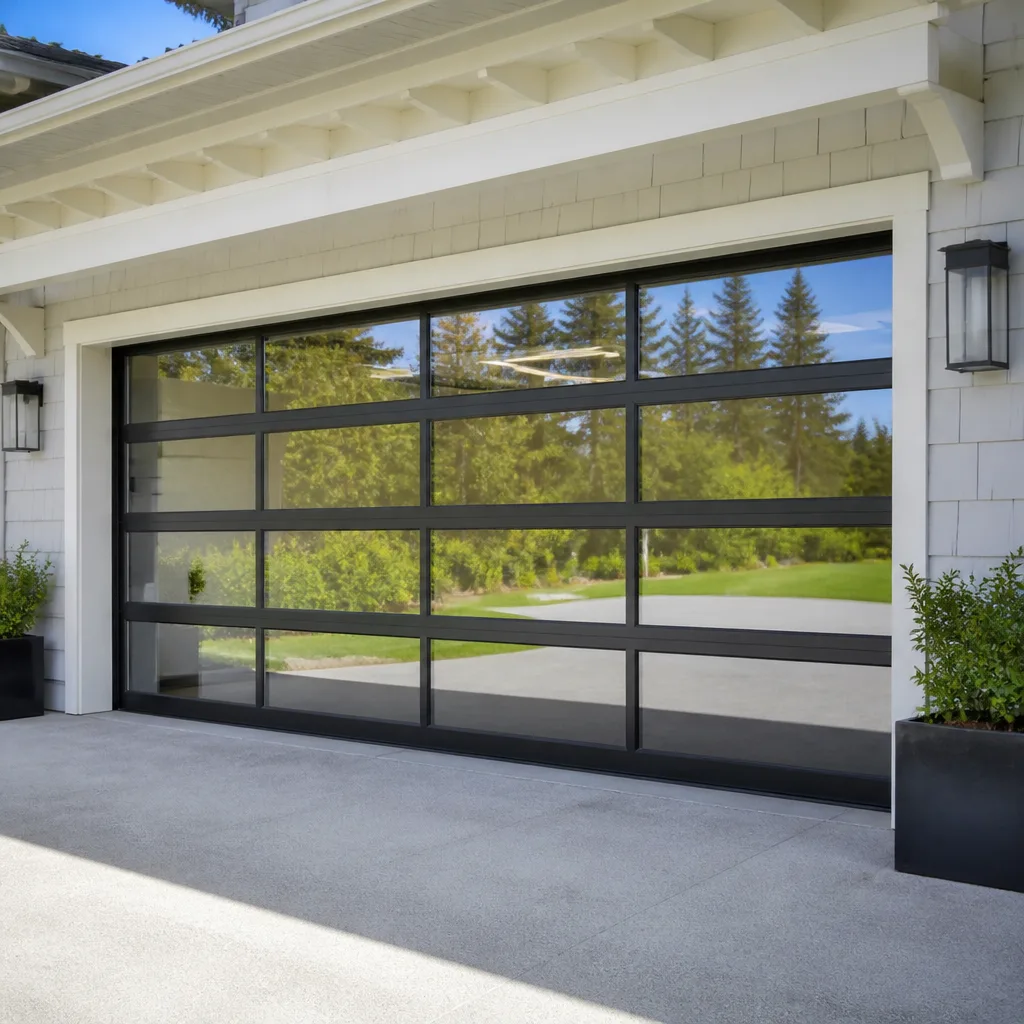 Full-view glass
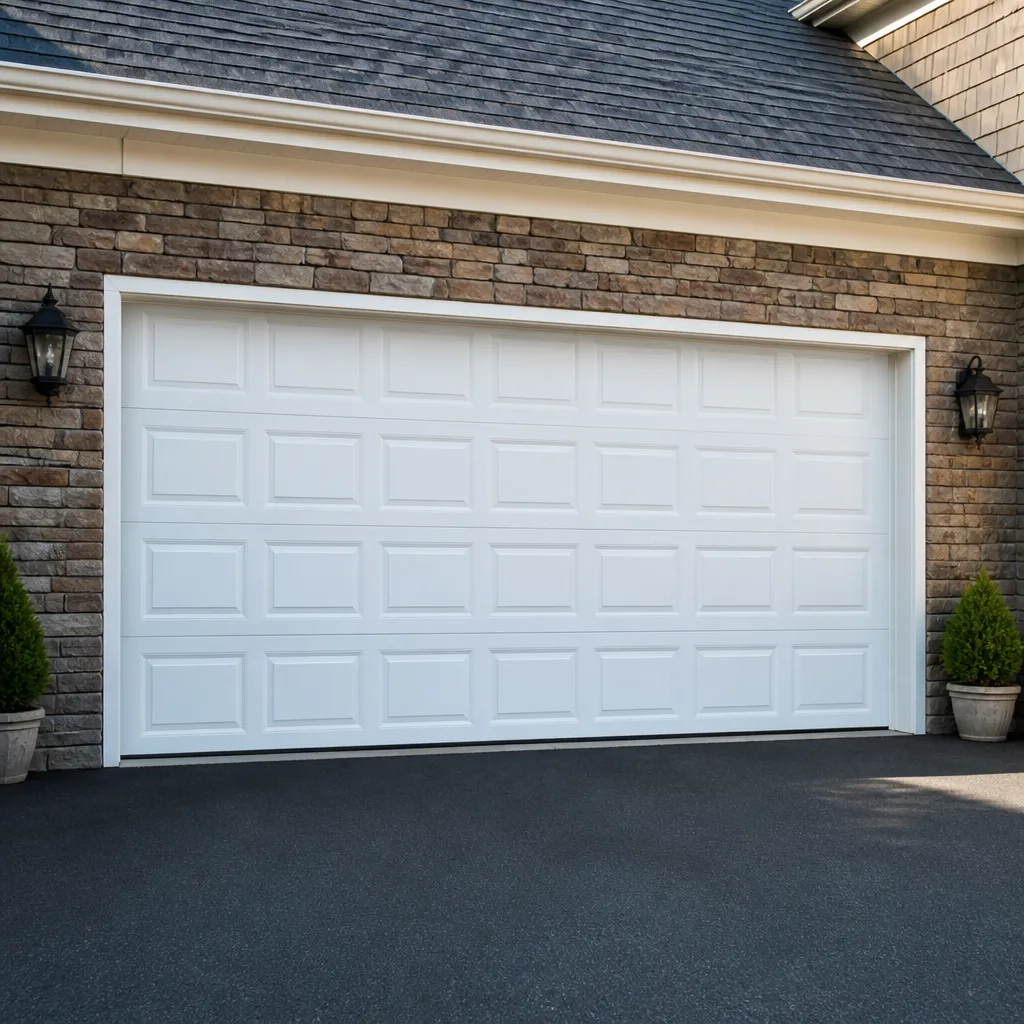 Raised-panel steel
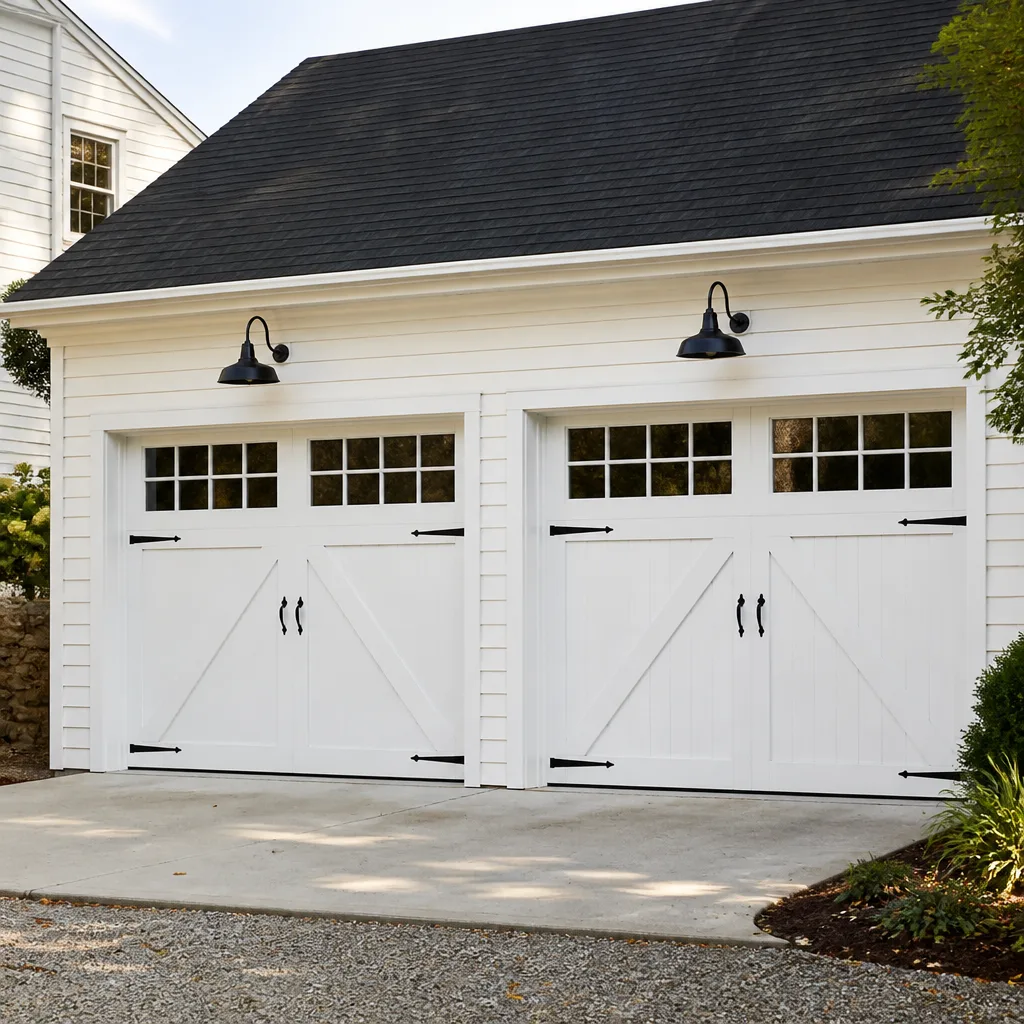 Carriage house
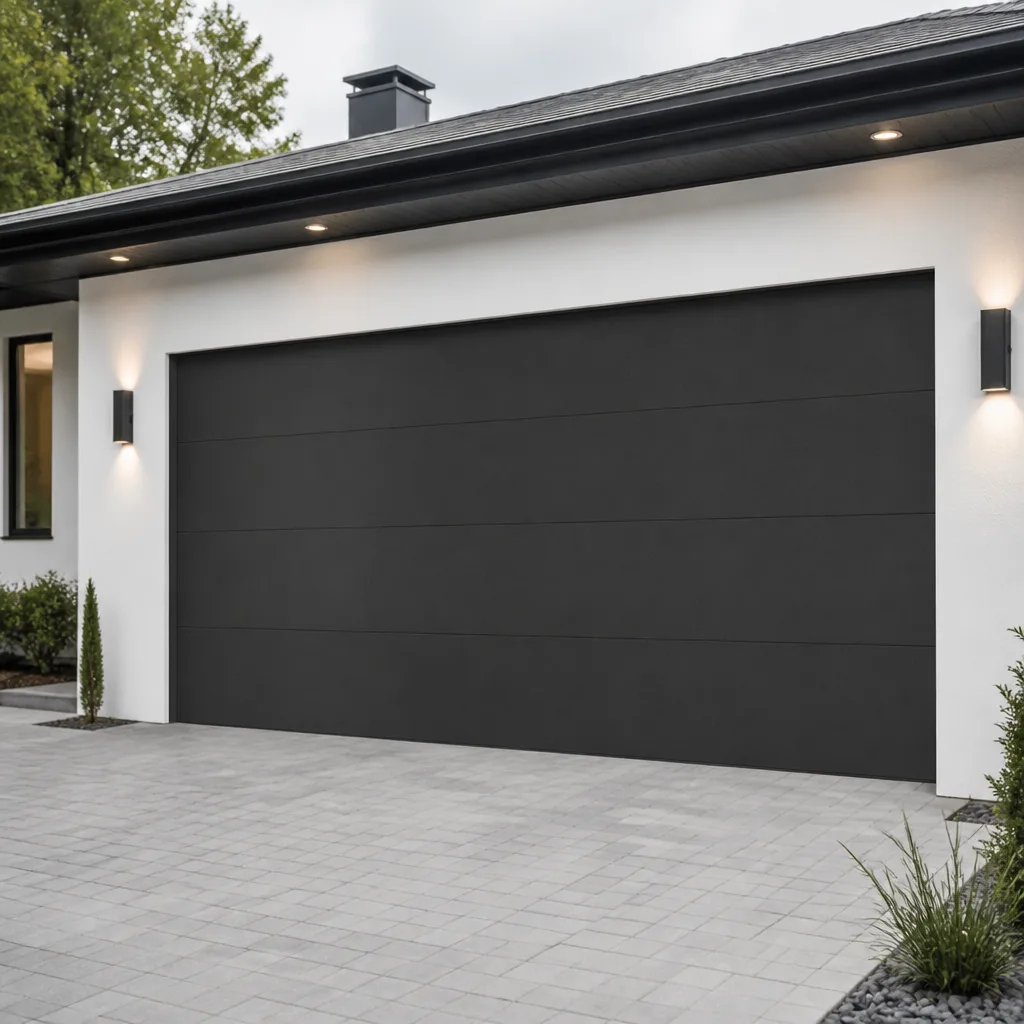 Modern flush
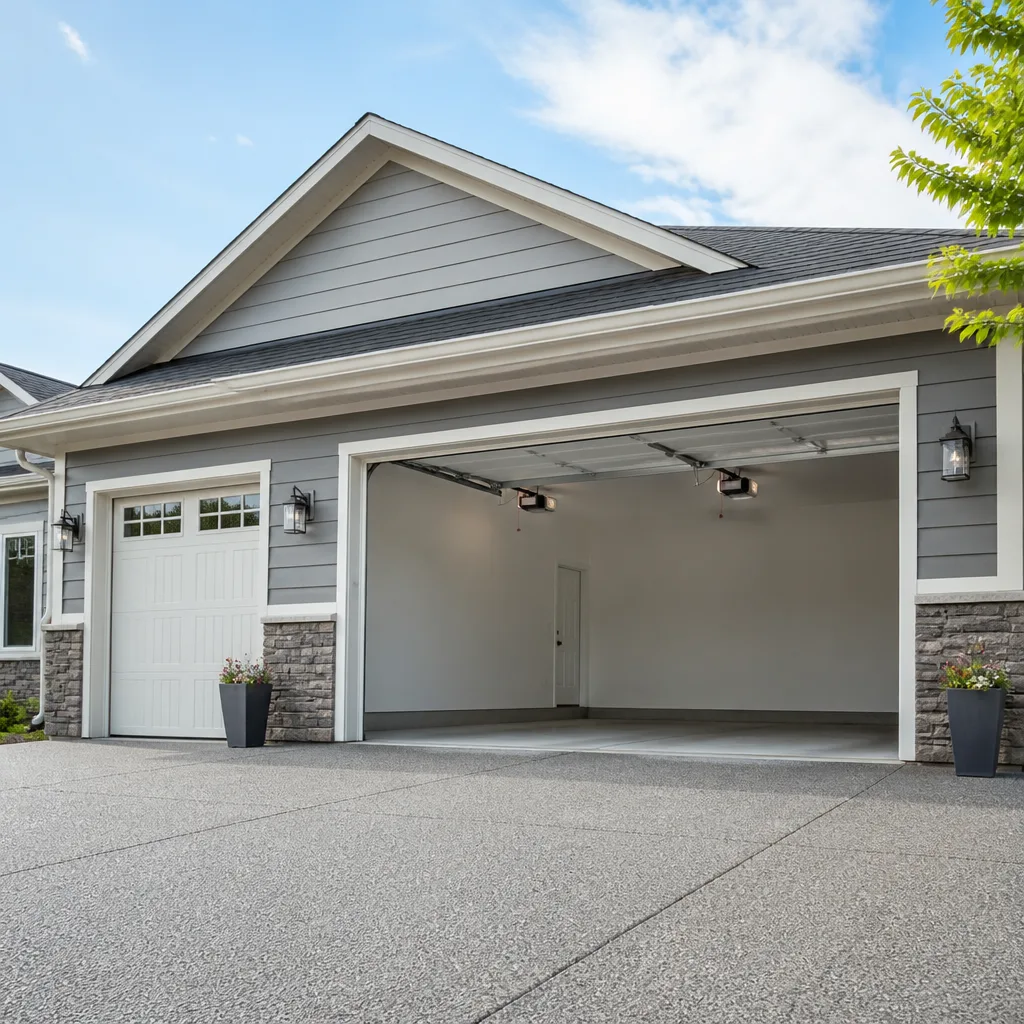 LiftMaster openers
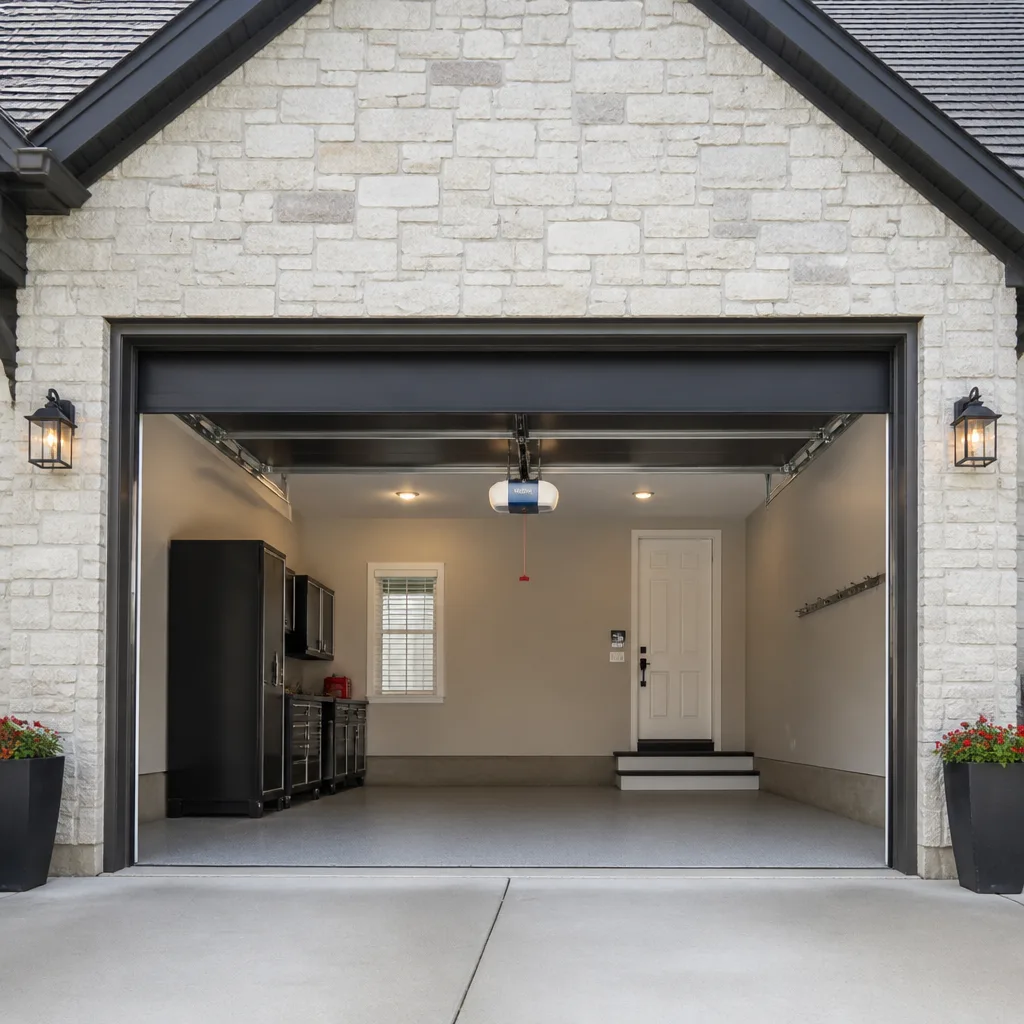 Chamberlain openers
Full 25-point door and opener safety check with every visit - springs, cables, rollers, tracks, and your LiftMaster or Chamberlain opener included
You get a price before we start. It does not change when the pro arrives.
Get your free estimateGarage Door Cost Breakdown: The Riverview Homeowner’s Reference for 2026
The garage door quote that looks $400 cheaper often excludes the Florida Product Approval upgrade you’re legally required to have in Hillsborough County. That’s the trap nobody warns you about. Most national pricing guides are written for Ohio and Michigan, where a door only has to keep out cold and snow. In Riverview, a door has to hold against hurricane-season wind pressure, and that requirement changes the math on every quote you’ll collect. The wide ranges you find online ($500 to $4,000+) aren’t wrong, they’re just untethered from what actually drives the number here. This reference breaks down the variables that move a Riverview garage door quote up or down, so the estimate in your hand is one you can actually read.
Quick Answer
In Riverview in 2026, a single-car steel garage door replacement typically runs $950 to $2,200 installed, while a double-car door lands around $1,600 to $3,600. A Florida Product Approval wind-load upgrade usually adds $300 to $900 to that figure, bringing a compliant double door to roughly $1,900 to $4,500. Labor, opener work, and any structural adjustment to the opening are quoted separately, and the written estimate you receive before work starts is the price you pay.
Styles & brands we work with
- Raised-panel steel
- Carriage house
- Modern flush
- Full-view glass
- LiftMaster openers
- Chamberlain openers
Table of Contents
- Why Online Garage Door Ranges Mislead Riverview Homeowners
- What Does a New Garage Door Cost by Type in Riverview?
- How Much Does the Florida Product Approval Wind-Load Upgrade Add?
- What Do Labor and Installation Variables Cost in Riverview?
- Repair or Replace? What Each Option Costs
- Which Upgrades Are Worth the Money?
- How to Read a Garage Door Quote Line by Line
- What Does a ‘Lifetime Warranty’ Actually Cover?
Why Online Garage Door Ranges Mislead Riverview Homeowners
The $500 to $4,000+ range you see everywhere isn’t dishonest. It’s just built around a national average that assumes moderate wind zones and standard openings. Two variables specific to Riverview push real quotes outside that band, and neither shows up in most pricing articles you’ll read.
The first is wind-load rating. Hillsborough County enforces Florida Product Approval requirements on exterior openings, which means the door assembly has to meet a specific design pressure rating. A base model that passes in a low-wind zone may not pass here. When a quote omits the FPA-compliant model and substitutes an unrated one, the invoice looks lower, but the door may not pass inspection and your policy may not cover the opening.
The second is corrosion-resistant hardware. Riverview’s humidity and summer rain load work on hinges, rollers, track fasteners, and springs year-round. Hardware that would last a decade in a dry climate can corrode faster here. Doors spec’d with galvanized or stainless components cost more up front and less over time.
Neither of these is an upsell. They’re baseline for a door installed in this county. Every quote you compare should name the wind rating and the hardware finish. If it doesn’t, ask for them in writing before you sign anything.
What Does a New Garage Door Cost by Type in Riverview?
Door type is the single biggest lever on your invoice. Material, size, and insulation all move the price, and the Riverview market adjusts each one for the wind-rating requirement. Here’s what typical installed ranges look like in 2026:
- Single-car steel, non-insulated, FPA-rated: $950 to $1,600 installed. The entry point for Riverview replacements, usually a basic raised-panel design from a brand like Clopay or Wayne Dalton.
- Single-car steel, insulated: $1,300 to $2,200. Insulation matters less for cold here than for noise and heat, but it’s a common upgrade when the garage sits under a bedroom.
- Double-car steel, non-insulated, FPA-rated: $1,600 to $2,800. The most common replacement in Riverview neighborhoods with two-car garages.
- Double-car steel, insulated: $2,100 to $3,600. Adds rigidity and quiet operation, especially on doors facing afternoon sun.
- Aluminum, full-view or glass-panel: $2,400 to $4,800 for a double. Popular on contemporary builds, but glass panels need impact-rated glazing to meet county requirements, which pushes the price up.
- Wood composite or carriage-style steel: $3,200 to $5,800 for a double. The look of wood with better moisture tolerance, from lines like Amarr or Clopay’s carriage collections.
Every one of those ranges assumes a standard 8-foot or 9-foot opening and a straightforward install. A non-standard opening width, a low-clearance track situation, or a door that needs a new header will add to the total. We quote those variables separately so you can see exactly what changed.
When you get a written estimate, the door model and its wind rating should be spelled out. A quote that names a brand and a size but not a design pressure rating is incomplete.
How Much Does the Florida Product Approval Wind-Load Upgrade Add?
The FPA upgrade typically adds $300 to $900 to a double-car door and $200 to $600 to a single. That range reflects the door model, the rated design pressure the opening requires, and the reinforced hardware package that goes with it. It’s the line item most often missing from a cheaper competing quote.
Here’s how the upgrade breaks down in practice:
- Rated door panels. The door itself has to be tested and labeled to a specific design pressure. Base models that don’t carry a Florida Product Approval number can’t be used on a permitted install.
- Reinforced struts and hinges. The wind-load package adds horizontal struts across the back of the door and heavier-gauge hinges and rollers, so the door stays in the tracks under pressure.
- Heavy-duty track and anchoring. The vertical track and its fasteners have to be rated for the load, which sometimes means upgraded anchors into the jamb.
- Reinforced or rated glazing. If the door has windows, the glazing has to meet the impact requirement too. This is where full-view doors get expensive.
- Permit and inspection. The install has to be permitted and inspected to confirm the assembly matches the approval. Most cities require a permit for this, so ask Riverview’s building department what the permit and inspection process involves before work begins.
If a quote is several hundred dollars below the others and doesn’t mention FPA compliance, the door may be unrated. That’s not a savings, it’s a liability. Ask the contractor to show the approval number in writing before you sign.
What Do Labor and Installation Variables Cost in Riverview?
Labor for a standard installation runs $250 to $500 on a single door and $400 to $800 on a double, depending on complexity. Emergency calls cost more than scheduled installs, and that’s a difference worth understanding before you compare a same-day repair quote against a scheduled one.
These are the variables that move labor cost most:
- Scheduled install vs. emergency call. A repair you book in advance gives the technician time to order parts and plan the job. An emergency call for a door that won’t close involves after-hours access and a callout premium, so the labor line reflects that. On installs, there’s no emergency premium because a new door is always scheduled around the order.
- Non-standard opening sizes. A door wider or taller than the usual 8×7 or 16×7 requires custom panels and possibly custom track, adding both material and time.
- Removal and disposal. Taking out the old door and hauling it away is a line item. It’s usually $50 to $150, and it should appear explicitly rather than hidden in the total.
- Opener integration. If you’re keeping your existing opener, the technician has to reconnect and rebalance. If you’re replacing it, that’s a separate quote. Brands like LiftMaster, Chamberlain, Genie, and Craftsman are what we see most in Riverview, and connecting a new door to an old opener often needs a small parts swap.
- Track or header repairs. A sagging header or a bent track section means framing work before the door goes in. That’s quoted separately and rarely optional.
- Access and clearance. A garage with low clearance or tight side room may need a low-headroom track kit, which adds material.
Every quote should show labor as a distinct line. A single lump-sum number with no breakdown is harder to compare and harder to challenge later. We itemize because it protects both sides: you see what you’re paying for, and there’s no ambiguity after the fact.
Repair or Replace? What Each Option Costs
Repair is usually the right call until the door crosses a threshold where replacement becomes cheaper over the next few years. As a rule, if the door itself is structurally sound and the failure is mechanical, repair wins. If the panels are rusted, dented, or delaminating, replacement is the smarter spend.
Typical Riverview repair ranges in 2026:
- Single spring replacement: $180 to $340. This is per spring. A matched pair is generally replaced together, so a pair runs about double that range, roughly $360 to $680.
- Cable replacement: $150 to $280 per side, often quoted as a pair.
- Opener repair: $120 to $350 depending on the fault. Logic board and motor work trend higher; sensor and remote issues trend lower.
- Roller and hinge replacement: $100 to $250. Cheap compared to a full replacement and one of the best value repairs on the list.
- Track realignment: $130 to $300. A door that’s jumped the tracks needs the track brought back into square, not just nudged.
- Panel replacement: $200 to $600 per panel, depending on model and finish. Only worth doing if the same panels are still available.
Spring work is the one repair we always flag as a safety decision rather than a money decision. The springs and cables carry high tension, and a spring that lets go while someone is working on it causes serious injury. Spring replacement is not a DIY repair, and it’s worth treating the quote as a safety cost. For that reason we handle it as its own dedicated service rather than folding it into a general call.
You’ll find the full garage door spring repair page useful if the spring is what failed. For opener issues, the garage door opener repair page covers diagnostics by brand.
Add up the repairs you’d need over the next three years. If that total approaches half the cost of a new door, replacement usually wins. Our technicians will give you both numbers in the same estimate so the comparison is in front of you.
Which Upgrades Are Worth the Money?
Some upgrades pay for themselves. Others are priced to look attractive on the quote but add little. This is the list we walk through with every Riverview homeowner before the order is placed.
Worth the upgrade:
- High-cycle springs. Standard springs are rated for around 10,000 cycles. High-cycle springs are rated for roughly 25,000 or more and usually add $60 to $150. For a household that uses the door several times a day, that’s a straightforward math problem in your favor.
- Corrosion-resistant hardware. Galvanized or stainless hinges, rollers, and fasteners add $40 to $120 and make a real difference in Riverview’s humidity. Cheap hardware is the most common cause of a door that starts squealing within a year.
- New bottom seal. $30 to $80. It keeps rain, insects, and small animals out and is often worn out on a door that looks fine. Always replace it with a new door.
- Cables matched to the new springs. Reusing old cables with new springs is a common shortcut and a common failure point. Matching them adds little to the bill and removes a future repair.
- Opener safety sensors. If the existing opener predates modern sensors or they’re failing, replacing them is a safety item, not an upgrade.
Rarely worth the money:
- Premium smart-home openers when a basic one already works. Wi-fi connectivity is genuinely useful if you want to check the door from your phone, but it isn’t required. A working opener with good sensors does the job.
- Insulation on a detached or unconditioned garage. Insulation helps when the garage shares a wall with living space. On a detached garage, it doesn’t move the needle enough to justify the cost.
- Decorative hardware kits. Hinges and handles that look like carriage hardware are cosmetic. They’re fine if you like the look, but they don’t improve function.
The honest test for any upgrade: does it change how long the door lasts, how safely it runs, or how much energy it keeps in? If the answer is no, it’s a cosmetic choice.
How to Read a Garage Door Quote Line by Line
A garage door quote should read like an invoice waiting to happen. Every line should name a part, a model, a quantity, or a service. A quote that says “garage door installation – $2,400” tells you nothing you can compare. Here’s how to work through one before you sign.
- Check that the door model and wind rating are named. The line should include the manufacturer, the model, the size, and the Florida Product Approval number. If any of those are missing, ask for them in writing.
- Confirm the hardware is listed separately. Springs, cables, rollers, hinges, and bottom seal should each appear with a spec and a price. “Hardware included” is a phrase that hides the cheap parts.
- Look for removal and disposal. It should be a visible line. If it isn’t, ask whether it’s in the total or will be added later.
- Read the labor line and the time frame. Labor should be distinct from materials. The quote should also state how long the install will take, and that the schedule is measured and confirmed before the order is placed.
- Check the permit and inspection language. If the quote doesn’t address permits, ask who pulls them. Most cities require a permit for this, so ask the building department what applies to your address.
- Read the warranty terms in full. Manufacturer warranty on the door and a separate labor warranty are two different things. Both should be in writing before you sign.
- Confirm the quote is fixed. The price quoted and agreed before work starts is the price you pay for the scope described. A quote that says “estimate only, final price subject to inspection” is not fixed, and you should ask what could change it.
If a competing quote comes in lower, put the two side by side and check these seven items. Nine times out of ten the difference is a missing line, not a better deal. We’re happy to walk through a competitor’s quote with you; a lower number that leaves out the FPA upgrade isn’t a lower number once the door is in.
What Does a ‘Lifetime Warranty’ Actually Cover?
A lifetime warranty on garage door springs almost never means the spring is replaced free for life. It typically covers the spring itself against manufacturing defect, not the labor, and not normal wear from cycles. The fine print is where the real terms live.
These are the clauses people miss:
- Prorated coverage. Many “lifetime” spring warranties prorate. The manufacturer may cover a percentage of the spring cost that declines with time, while you pay the full labor every time.
- Excludes normal cycle wear. Springs are wear items. A warranty that claims otherwise is worth reading closely. A 10,000-cycle spring failing after years of daily use is wear, not defect.
- Labor is separate. Even when the part is covered, the labor to diagnose and replace it usually isn’t. That’s the larger cost on a spring job.
- Original purchaser only and proof of purchase required. Transferability is rare. If you sell the house, the warranty often doesn’t follow the door.
- Door warranty vs. hardware warranty. The door manufacturer’s warranty covers the panels and finish. The hardware and springs are typically covered separately, often by a different company with different terms.
Ask for the warranty document, not the summary on the quote. Read the exclusions page first. If the quote says “lifetime warranty” and the document says “limited lifetime, prorated, labor not included”, that’s what you’re actually buying. Knowing that up front means no surprise on the day a spring lets go.
For the broader repair picture, our garage door repair page spells out exactly what’s covered on a typical service call, and the Riverview Garage Door Repair Co main page covers the full range of what we handle, from springs to new installs.
Common Mistakes to Avoid
- Comparing bottom-line totals without comparing line items. The $400-cheaper quote usually lacks the FPA upgrade or specs cheaper hardware. Put both quotes side by side and check the seven items above before you decide.
- Choosing a door that isn’t rated for your wind zone. A door without a Florida Product Approval number may fail inspection and may leave your opening unprotected. Ask for the approval number in writing on every quote.
- Letting someone reuse old cables with new springs. Old cables under new tension are a common failure point and a safety risk. Ask that cables be matched to the springs.
- Accepting “hardware included” on the quote. It usually means the cheapest rollers and hinges, which are the first things to fail in Riverview’s humidity. Get the hardware spec in writing.
- Treating a lifetime warranty as a maintenance plan. Most spring warranties exclude labor and prorate the part. Read the exclusions before you count on it.
- Skipping the permit. Most cities require a permit for garage door replacement, and an inspector confirms the assembly matches the approval. A crew that offers to skip the permit is a red flag.
- Trying spring work as a DIY project. The springs and cables hold high tension and can cause serious injury. This is the one repair to always hand to a trained professional.
See the difference
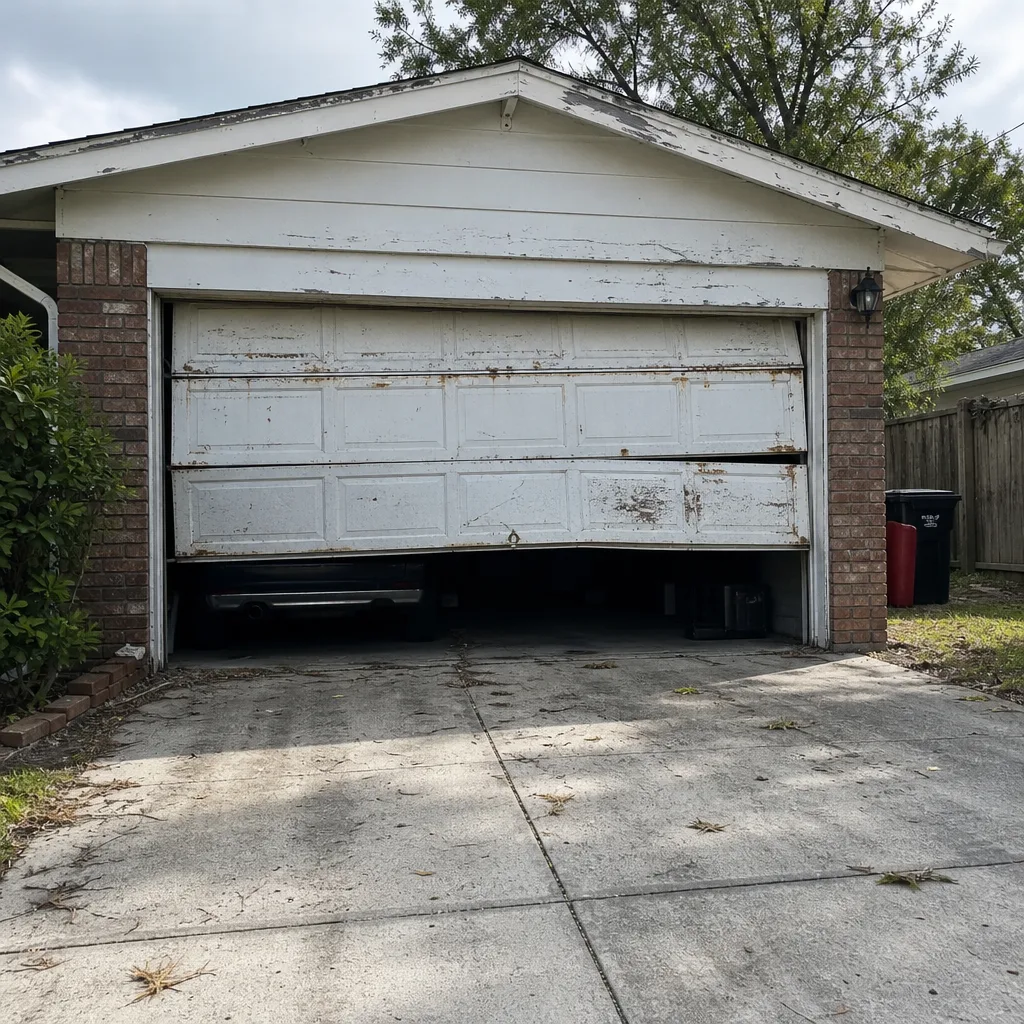 Before
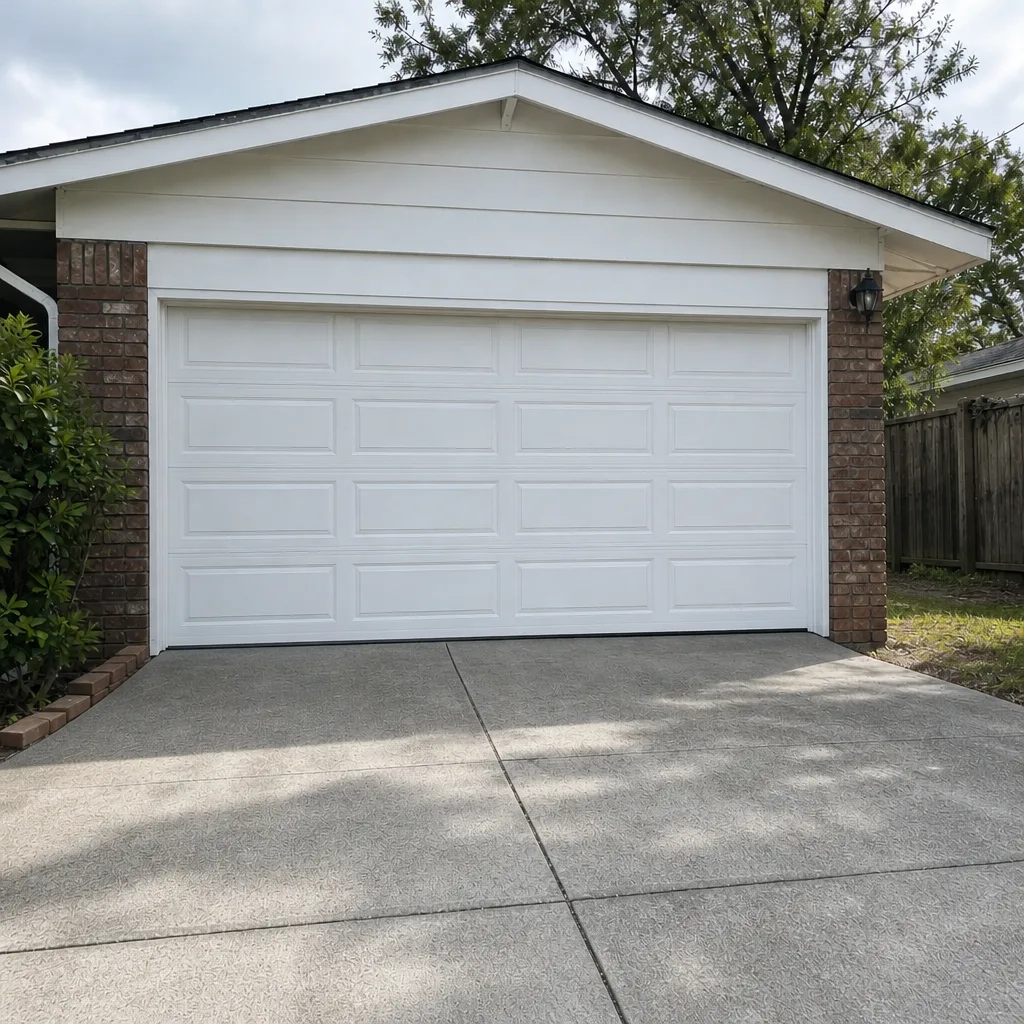 After
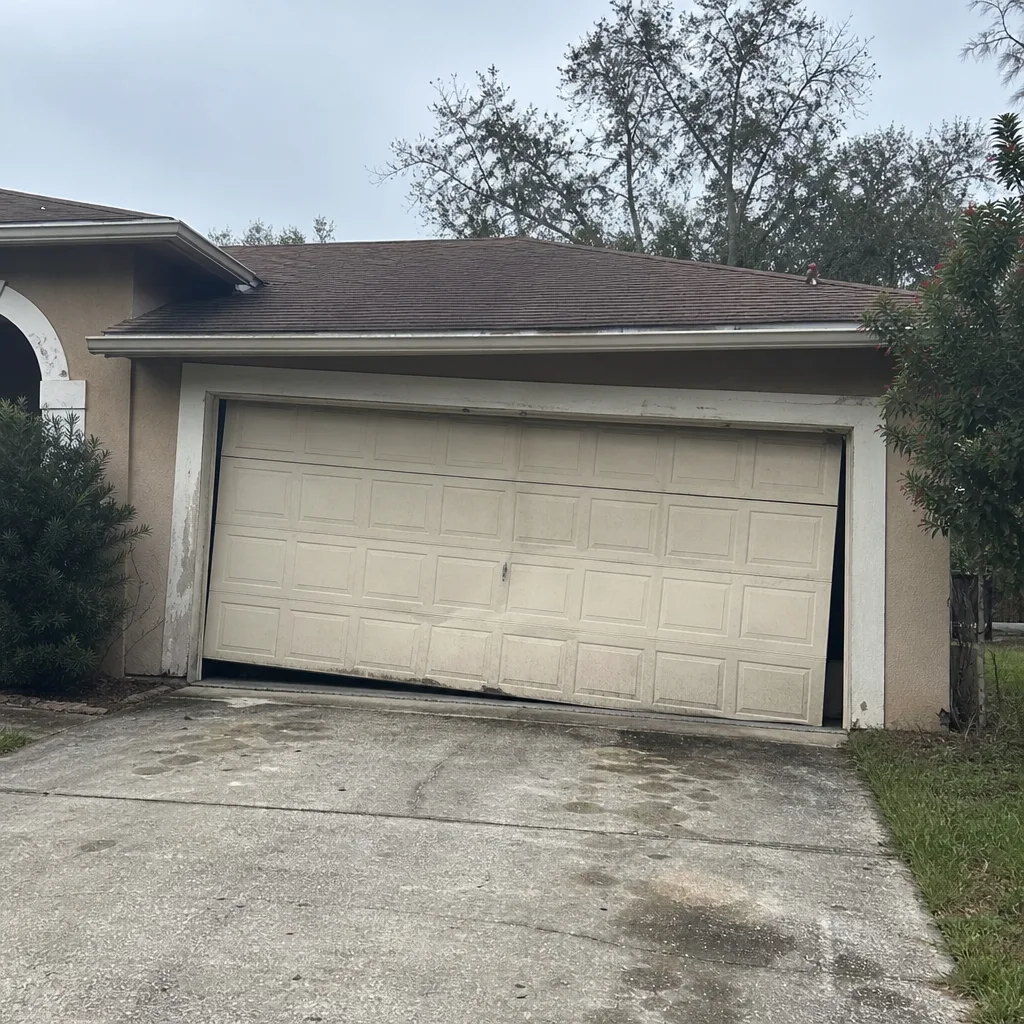 Before
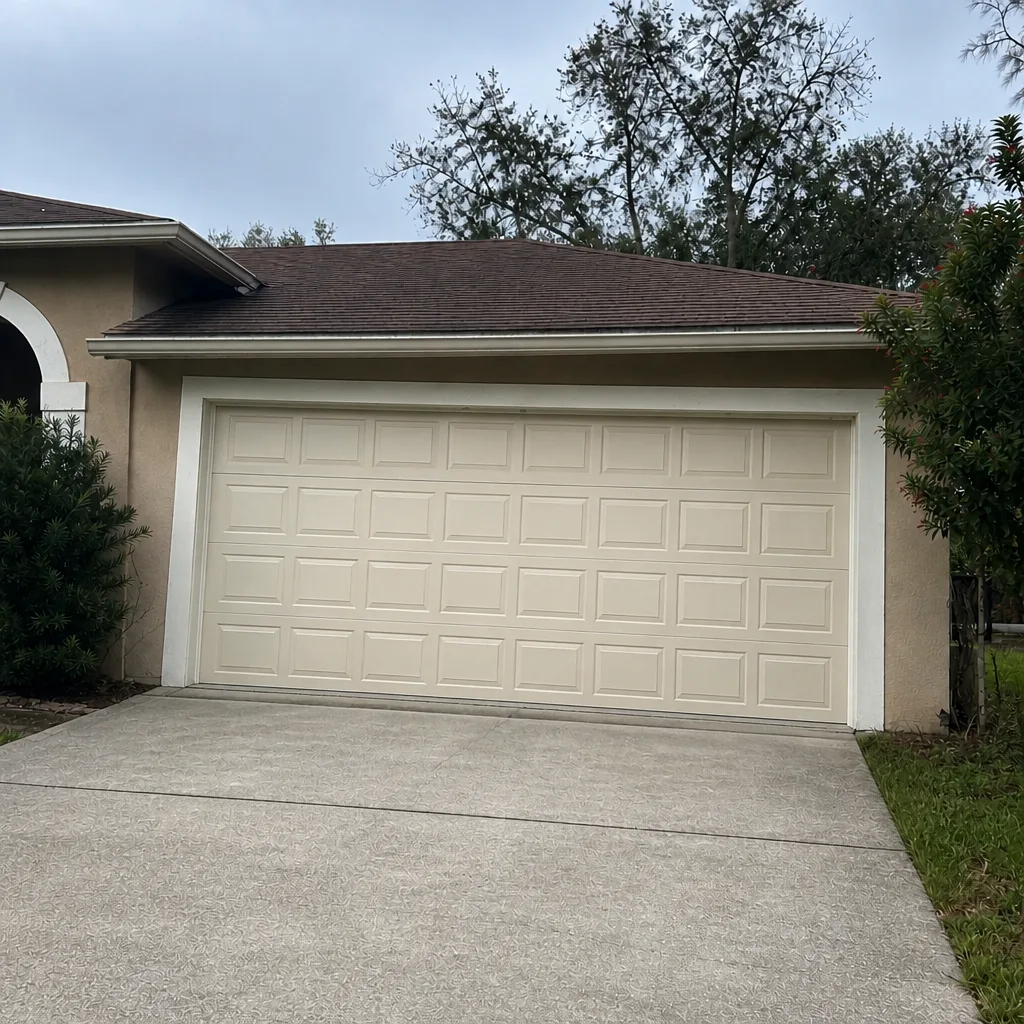 After
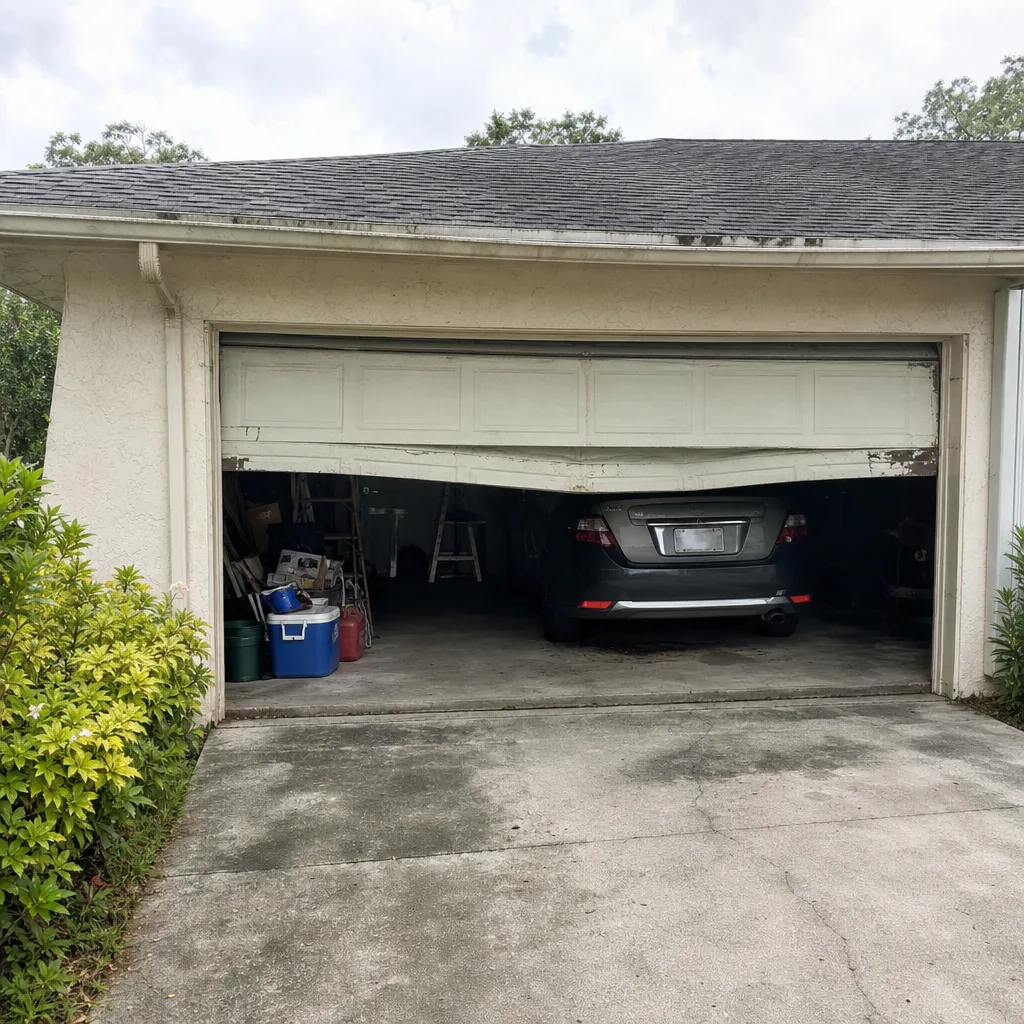 Before
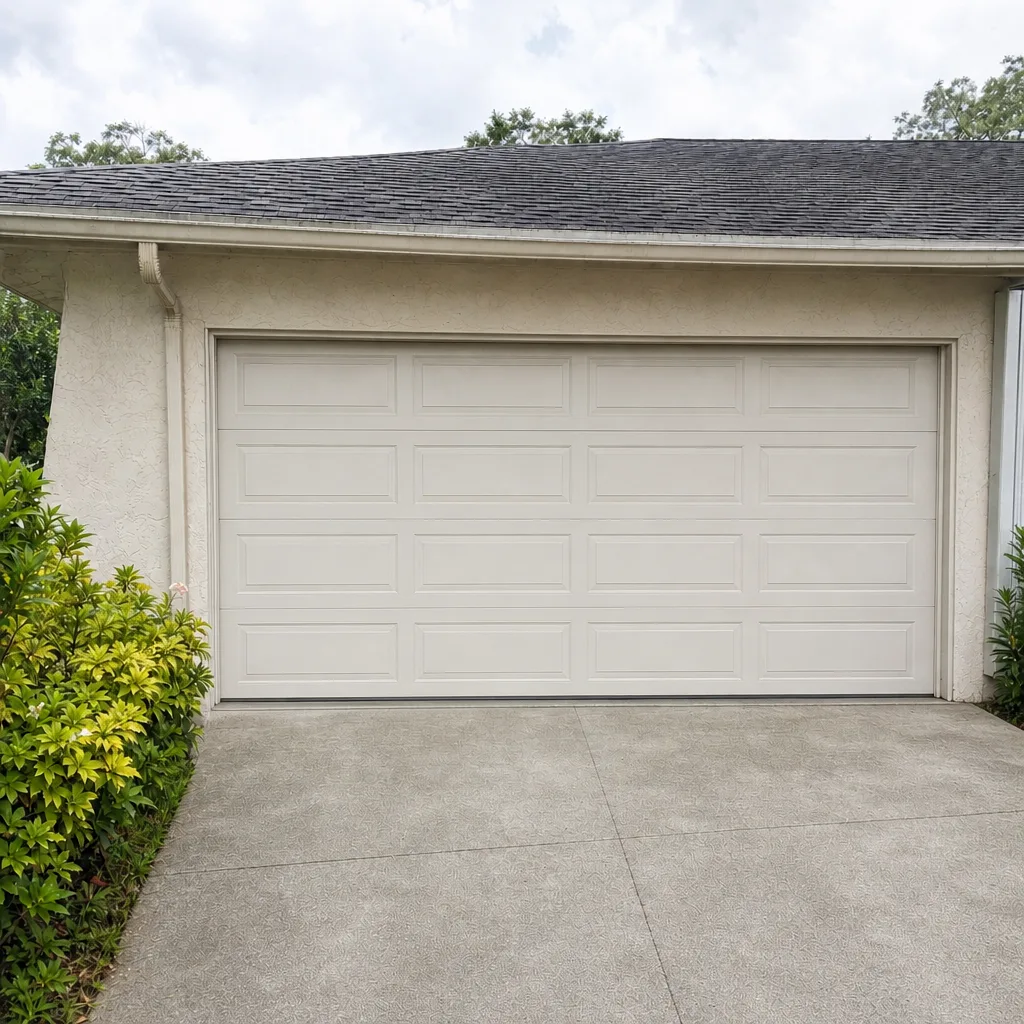 After
When to Call a Professional
Some jobs are worth a call, and some are non-negotiable. Call us when the door won’t close, when a spring has snapped, when the opener runs but the door doesn’t move, or when the door has come off its tracks. Call when the door is noticeably heavier to lift than it used to be, since that usually signals a spring losing tension. Call when you hear a loud bang from the garage and the door won’t open, or when the door closes unevenly or the safety sensors keep tripping. Spring and cable work is always a call, no exceptions; the tension involved makes it dangerous even for experienced DIYers. On the planned side, call when you’re ready to replace a rusted or dented door, when you’re matching a new door to a new opener, or when you want a free estimate before deciding between repair and replacement.
Riverview Garage Door Repair Co offers free estimates in Riverview and connects you with licensed, insured local professionals. Call (866) 521-4006.
Frequently Asked Questions
A single-car steel door typically runs $950 to $2,200 installed, and a double-car door runs $1,600 to $3,600, before the Florida Product Approval upgrade. Add roughly $200 to $600 for a single door and $300 to $900 for a double to reach FPA compliance. Call (866) 521-4006 for an exact quote on your opening; estimates are free.
Yes. Hillsborough County enforces Florida Product Approval requirements on exterior openings, so the door assembly has to carry a rated design pressure for the opening. Most installations also require a permit and inspection. Ask Riverview’s building department what applies to your address before work begins.
Single spring replacement typically costs $180 to $340, and a matched pair usually runs $360 to $680 because pairs are replaced together. We offer emergency service for doors that won’t close, so call (866) 521-4006 and we’ll connect you with a local pro who can respond the same day.
The written quote you agree to before work starts is the price for the scope described. If a technician finds something the quote didn’t account for, like a bent track or a compromised header, you’ll see the additional cost, in writing, before any of that work begins. You approve it or you don’t.
We work on LiftMaster, Chamberlain, Genie, Craftsman, and other major brands, from older units to modern wi-fi-connected openers. Our technicians have up to 8 years of experience and arrive familiar with the hardware on your door. Call (866) 521-4006 to schedule a diagnostic.
Often not. A quote that’s several hundred dollars lower usually excludes the FPA upgrade, specs basic hardware, or leaves out removal and disposal. Compare line items and confirm the wind rating and hardware spec appear in writing before you sign.
The Bottom Line
The Riverview garage door number to budget for is the compliant one, not the lowest one. A double-car door with the FPA upgrade and decent hardware lands around $1,900 to $4,500 installed, and a single around $1,200 to $2,800 once the wind rating is included. Repairs are usually the smarter spend until they approach half the replacement cost. Read every quote for the wind rating, the hardware spec, and the warranty exclusions before you sign. If the math gets complicated, call us; we’ll put repair and replacement side by side in one estimate and quote it before any work starts.
Riverview Garage Door Repair Co handles repair, opener repair, spring repair, and new-door installation across Riverview, working on LiftMaster, Chamberlain, Genie, Clopay, Amarr, Wayne Dalton, Craftsman, and Raynor equipment. Whether your door needs a spring, a tune-up, or a full replacement, call (866) 521-4006 for a free estimate. Our technicians have up to 8 years of experience, and every job starts with a written price you agree to first.
Written by the team at Riverview Garage Door Repair Co.