Last updated November 21, 2026
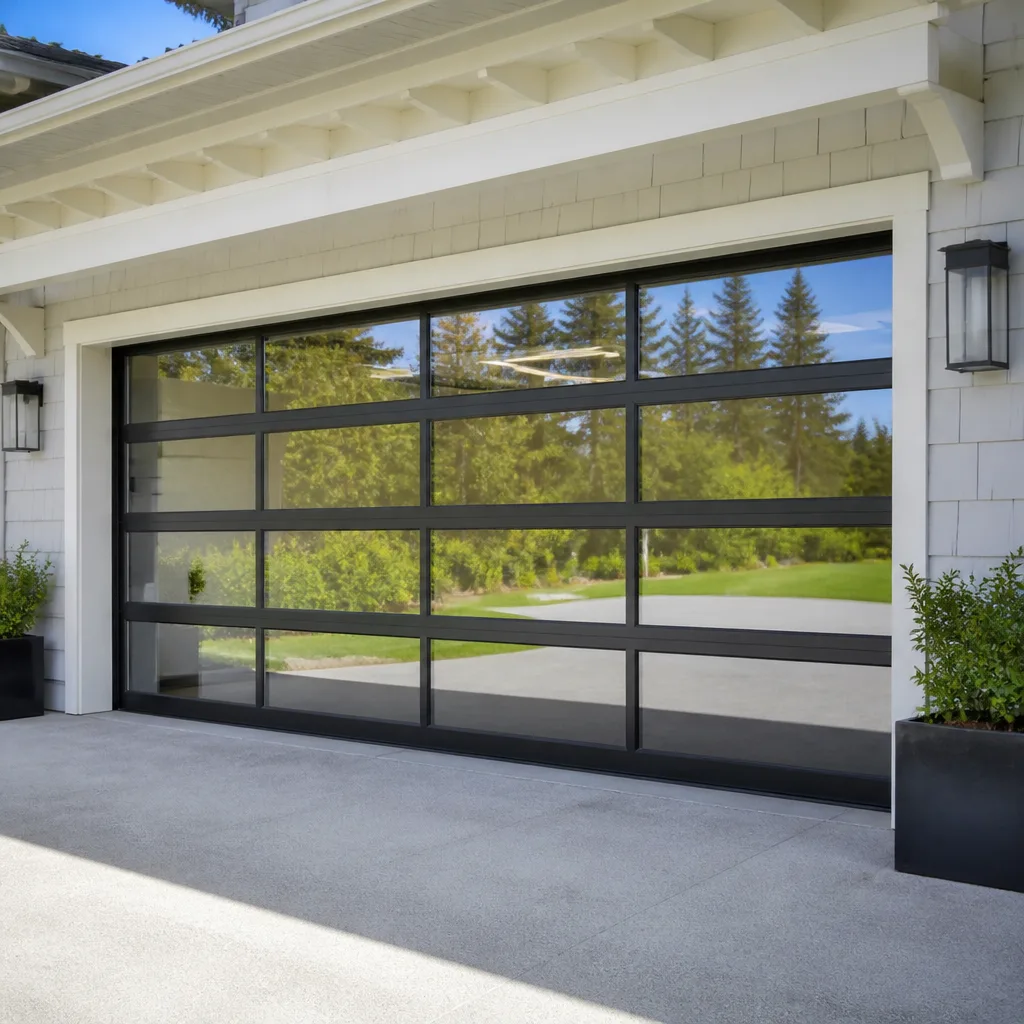 Full-view glass
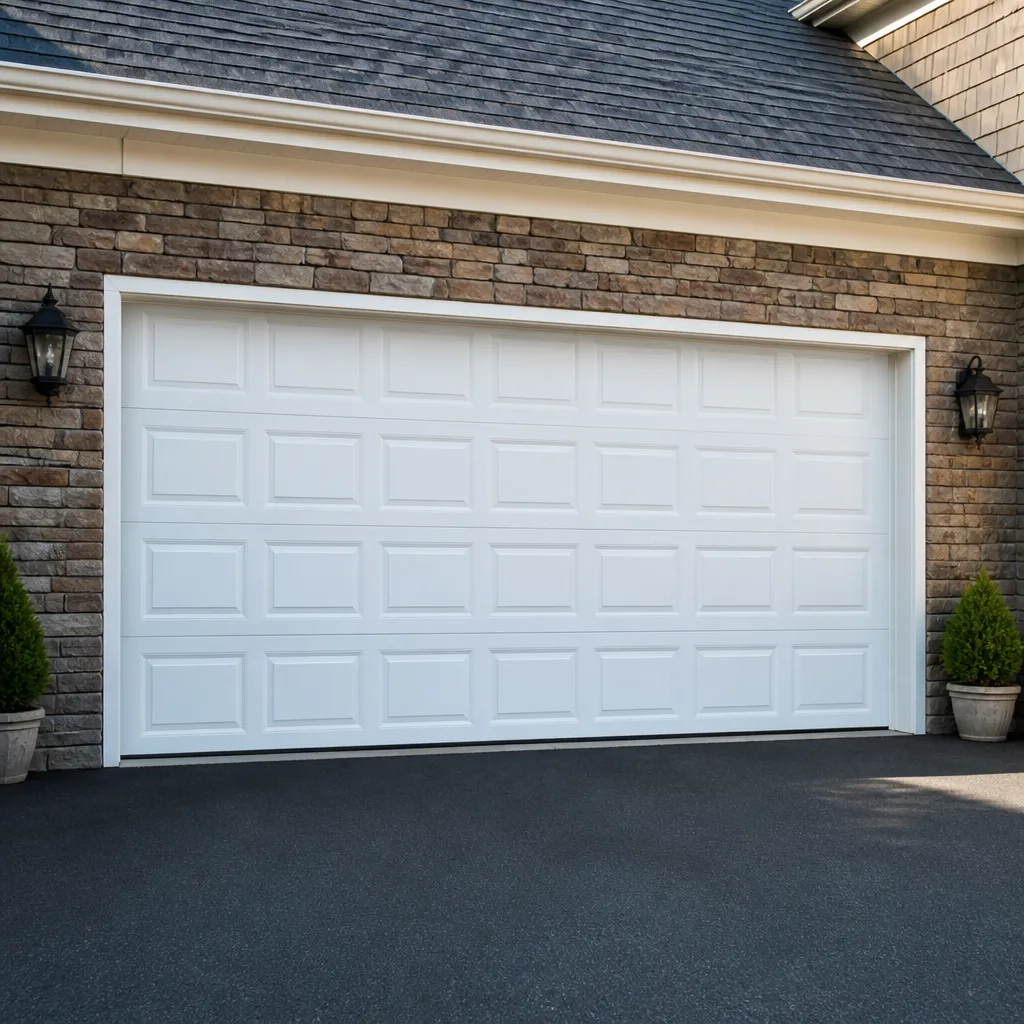 Raised-panel steel
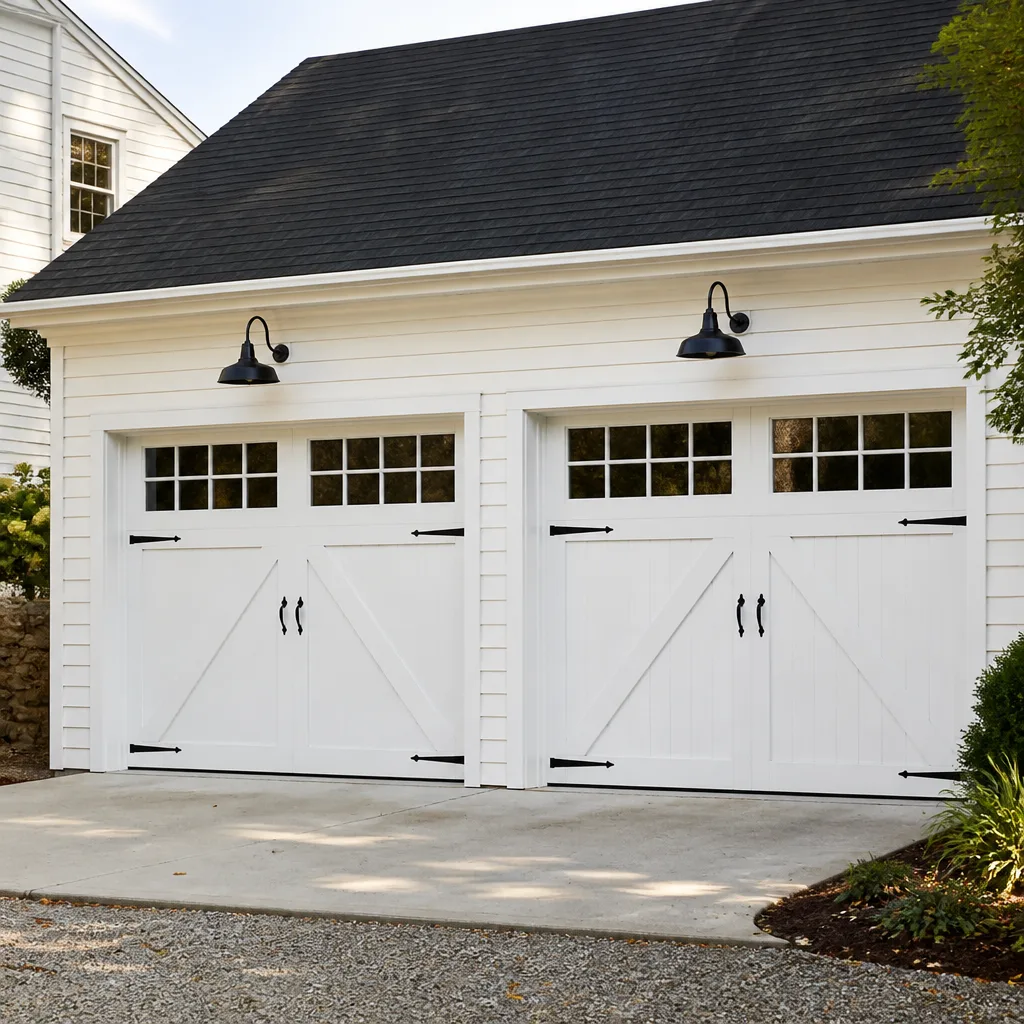 Carriage house
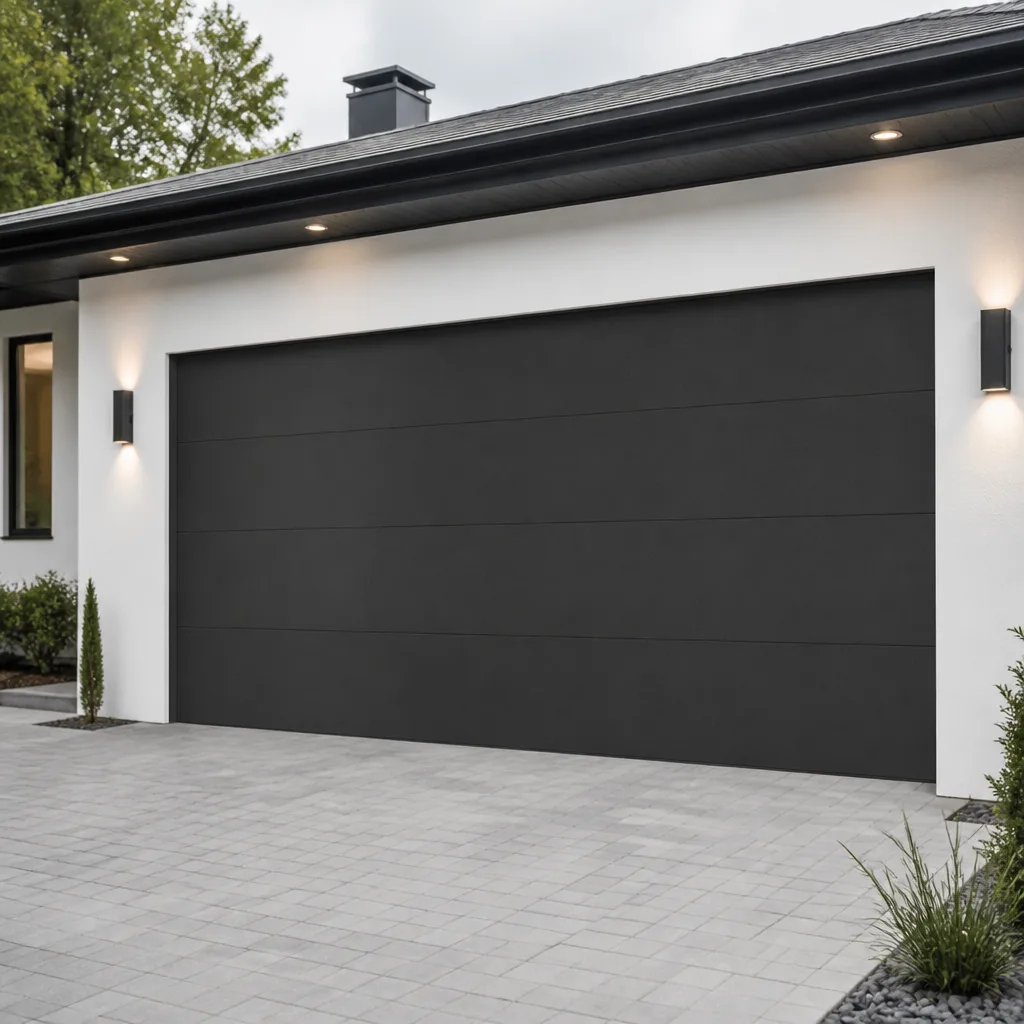 Modern flush
 LiftMaster openers
 Chamberlain openers
Full 25-point door and opener safety check with every visit - springs, cables, rollers, tracks, and your LiftMaster or Chamberlain opener included
You get a price before we start. It does not change when the pro arrives.
Get your free estimateGarage Door Warning Signs: A Riverview Homeowner’s Reference Guide
Two sounds come out of a failing garage door that people describe almost identically: grinding and scraping. One is usually a five-minute lubrication issue. The other means a roller has left the track and the door’s weight is now hanging on hardware that wasn’t built to carry it. Treat them the same and you’ll either panic over nothing or wait until something gives. This guide maps each warning sign to the part that’s actually failing and the consequence of ignoring it, so you can triage a Riverview door with a clear head. You’ll learn what each noise means, which visual signs are urgent, how Florida humidity affects torsion springs, and what opener behavior tells you about the motor behind it.
Quick Answer
The most urgent garage door warning signs are a door that won’t stay balanced halfway up, a torsion spring with visible rust or a gap in the coil, a frayed or kinked cable, and any door that reverses or closes unevenly. A grinding or squealing door is usually a maintenance issue you can schedule; a popping bang followed by a door that won’t lift is a broken spring and needs professional service before the door is used again. When in doubt, keep the door down and call.
Styles & brands we work with
- Raised-panel steel
- Carriage house
- Modern flush
- Full-view glass
- LiftMaster openers
- Chamberlain openers
Table of Contents
- The Sound Diagnostic: What Each Noise Tells You
- Visual Signs: Urgent vs. Cosmetic
- How Riverview Humidity Attacks Torsion Springs
- Opener Behavior Patterns, Decoded
- The Slow Door Diagnosis
- The Balance Test and Other Checks You Can Do Safely
- When to Call a Professional
- Frequently Asked Questions
The Sound Diagnostic: What Each Noise Tells You
Sound is the earliest signal a garage door gives, and it’s also the most misread. A door doesn’t have many ways to make noise, so the same sound tends to point to the same component every time. Here’s the mapping we use when a Riverview homeowner calls and describes what they’re hearing.
- Grinding, low and constant while the door moves: usually dry or worn rollers and hinges, or a torsion spring that’s lost its lubrication. This is the $20-fix category. A can of garage door lubricant on the hinges, rollers, and spring coil quiets most of it. If grinding continues after lubrication, a roller bearing is likely shot and should be replaced before it damages the track.
- Scraping, metallic, and rhythmic: a roller or the door edge is contacting the track. Something has bent or shifted. This one doesn’t improve with lubricant, and if the door jumps the rail the repair gets more expensive fast. Have it looked at promptly.
- Popping or a single loud bang: a torsion spring letting go. There’s no mistaking it once you’ve heard it. The door becomes extremely heavy and dangerous to lift by hand. Stop using the door and call for spring service.
- Squealing or squeaking: metal-on-metal friction, most often at the hinges and the opener’s rail. Lubrication usually resolves it. Persistent squeal at the opener itself can mean the gear or chain needs attention.
- Rattling, especially in wind or as the door finishes its travel: loose bolts, a loose bottom bracket, or a door panel that’s working itself free. Rattling is worth a look because loose hardware under tension is how bigger failures start.
One note that matters for anyone in Riverview: a door that pops or squeals during the rainy season can sound worse than it is because humidity works on the moving parts differently than dry air does. Match the sound to the part before you decide how urgent it is.
Visual Signs: Urgent vs. Cosmetic
Not every visual oddity needs a call, and not every call needs to be urgent. The trick is separating the signs that mean “the door is working harder than it should” from the signs that mean “the door is about to fail.”
Genuinely urgent
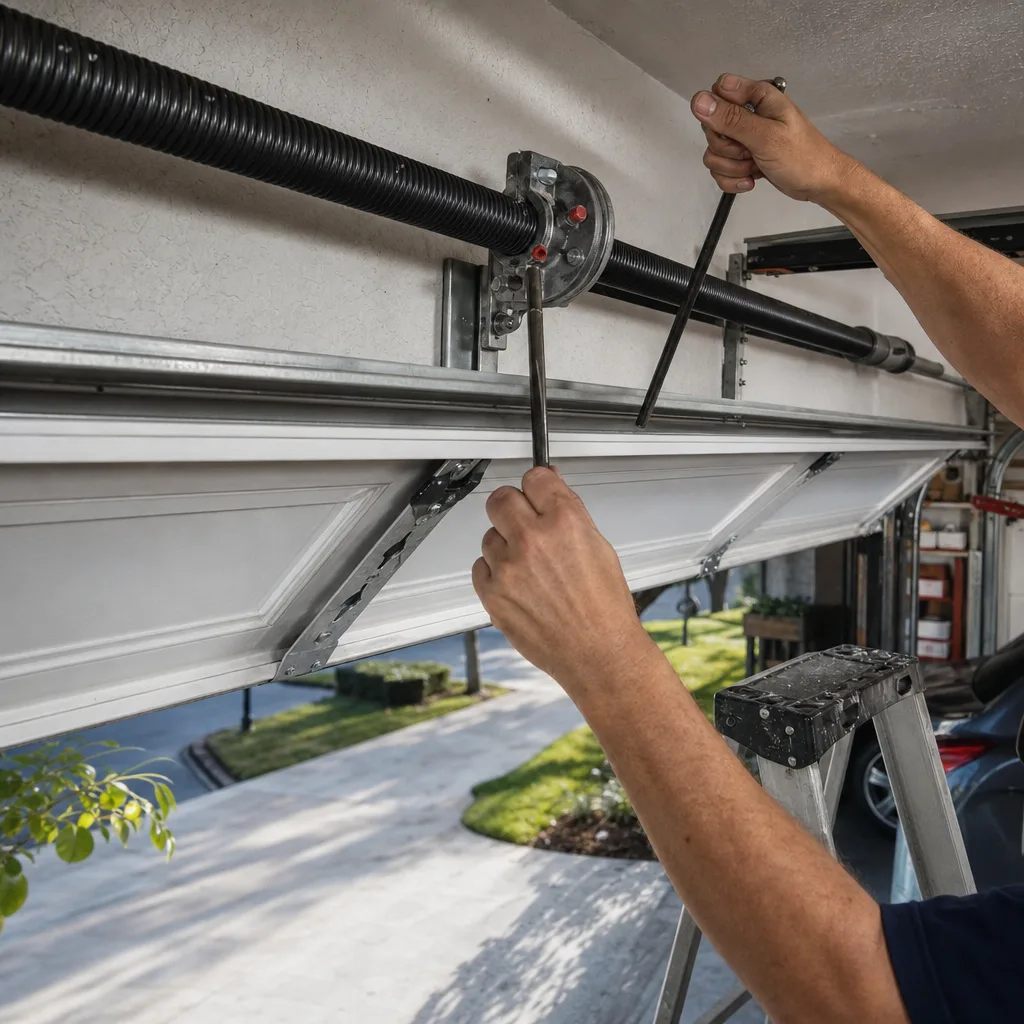
- A gap or separation in the torsion spring coil. A healthy spring is a continuous, tightly wound coil. A visible gap means it has broken or is about to. Do not run the door.
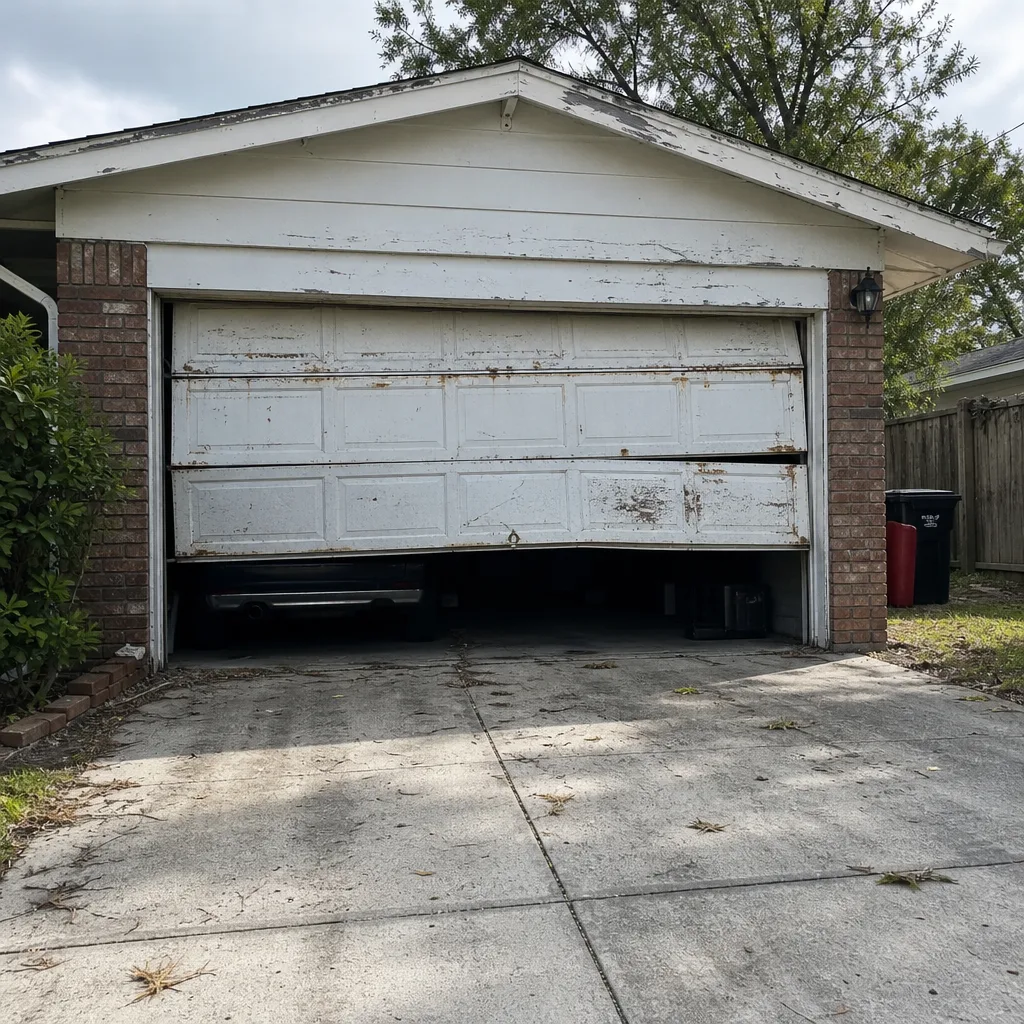
- A frayed or kinked cable. A normal cable runs straight and taut along its path. A failing cable looks like a worn rope: individual strands starting to separate, a kink, or a fuzzy, frayed section near the drum. Cables are under extreme tension and can snap without warning. This is a professional repair, not a homeowner one.
- A door hanging unevenly on one side. One side higher than the other means the door is out of balance and the opener is straining to compensate.
- Bent or twisted track. A visibly deformed track will eventually let a roller escape, and a door that comes off the track can fall.
Worth noting, less urgent
- Paint bubbling or fading on steel panels, common in Florida sun and humidity. Cosmetic, though it can be an early sign of moisture getting under the finish.
- A slightly noisy opener that still works reliably. Lubricate the rail and check the chain tension before assuming the motor is failing.
- A remote that works from close range but not from the driveway. Usually a battery or antenna issue, not a door problem.
If you’re not sure which bucket a sign falls in, the safe default is to leave the door closed and have it checked. Our team handles garage door repair across Riverview and can tell you over the phone which signs are urgent and which can wait for a scheduled visit.
How Riverview Humidity Attacks Torsion Springs
Springs are steel under constant load, and steel under constant load in a humid climate doesn’t age the way it does in a dry one. West-central Florida’s warm, humid air holds moisture against the coil, and garage spaces here often sit warmer and stickier than the rest of the house because they’re less conditioned. That combination means the protective coating on a torsion spring can break down faster than a homeowner expects.
When the coating fails, you get rust. Rust on a spring isn’t purely cosmetic: it’s the sign that corrosion is eating into the metal, and a spring carries the entire weight of the door. A rusted spring is a weakened spring, and it can fail earlier in its life than an identical spring in a drier place.
What rust coloring actually signals
- Light surface oxidation, dull orange tint: early. Not an emergency, but it tells you the coating is degrading. Mention it at your next service visit.
- Darker, flaky rust along the coil, especially near the ends: the spring is thinning. Have it inspected before the door is used heavily.
- Rust plus a visible gap, or a spring that looks unevenly wound: treat as a failure in progress. Stop using the door and call for garage door spring repair.
Torsion spring replacement is the most hazardous repair on a residential garage door. The spring is wound to store hundreds of pounds of force, and that energy has to be released safely. We’ve seen enough near-misses to say it plainly: spring replacement is not a DIY repair. One wrong move on a torsion spring can cost a hand or worse. If a spring in your Riverview home shows corrosion or has failed, call a trained technician rather than reaching for tools.
Opener Behavior Patterns, Decoded
The opener is the part of the system most homeowners notice first, because it’s the part that talks to them. It has a fixed vocabulary: hesitations, reversals, stubborn remotes, and short stop-and-go moves. Each of those behaviors points to a fairly specific cause, and reading them right saves you from replacing a motor that’s fine or ignoring one that isn’t.
Hesitation at the start or middle of travel
If the opener starts, stalls for a beat, then continues, the motor is drawing more current than it expects. Sometimes it’s a door that’s out of balance or a worn roller dragging, and sometimes it’s the opener’s capacitor or logic board starting to fail. On a Chamberlain or LiftMaster unit, the opener’s capacity to detect resistance is what causes the pause. If it’s the door, fix the door first. If the door moves freely by hand, the opener is likely the problem.
The door reverses on its own
A door that goes up and then comes back down, or closes partway and reverses, is usually hitting one of its safety sensors or the safety reverse, which detects resistance. If it reverses on the way down and the sensors are aligned and clear of obstruction, the door is binding somewhere in its track and the opener is doing what it’s built to do: stop. That’s a door-side repair, not an opener replacement.
Remote lag or short range
Working from the driveway but not from inside, or needing to press the button twice, usually points to a weak remote battery, a loose antenna on the opener, or interference from a newer LED bulb or nearby router. Try the wall button first: if the wall button works reliably, the door is fine and the remote is the thing to check.
Short stop-and-go moves
An opener that moves a foot, stops, moves again, and repeats may have a failing gear or a limit switch that’s misadjusted. On an older Genie or Craftsman unit, this is often worth repairing rather than replacing, especially if the rest of the system is sound. Our technicians are familiar with both legacy and wi-fi-connected systems, so a decades-old unit and a smart-home opener get the same caliber of garage door opener repair.
The Slow Door Diagnosis
A door that’s been getting slower over months or weeks is almost never “just age.” A garage door is a mechanical system, and when it slows down, something in that system is resisting. The symptom is gradual, which is why homeowners often live with it until the door stops working entirely. Here’s how to narrow it down.
- Disconnect the opener and lift the door by hand. If it lifts easily and stays balanced, the door itself is fine and the problem is the opener. If it’s heavy, binds, or won’t stay up, the door’s tension or balance is the issue. This is the single most useful test you can run, and it’s safe because the opener isn’t doing any work.
- Have someone watch the door as it travels. A door that drifts unevenly, one side ahead of the other, is out of balance. A door that jerks or binds at a certain point has a track or roller problem at that spot.
- Listen for the tone of the motor. A motor that sounds like it’s working harder (higher pitch, more effort) is compensating for a resistance it shouldn’t have to overcome.
- Check the rollers and hinges for wear and grit. The fix may simply be a lubrication and adjustment visit.
If the door is balanced, the opener is the next place to look: a failing capacitor or worn drive gear makes a motor weaker and slower over time. If the door itself is heavy or binds, the issue is tension or track, and the tension side should be handled by a technician. Read the cause correctly and a slow door is usually an inexpensive fix; misread it and you’ll either replace a good opener or nurse a failing door until it stops entirely.
The Balance Test and Other Checks You Can Do Safely
You can safely check a few things yourself, and doing so gives a technician a much better picture when you call. The rule for every check: no hands near the springs or cables, and never work on the door while it’s under tension.
- Balance test. Disconnect the opener (usually a pull cord on the rail), lift the door to about waist height, and let go. A balanced door stays roughly where you left it. A door that slams down or slowly sinks has lost its spring tension.
- Sensor check. Break the beam between the two safety sensors near the floor with your foot or a box. The opener should respond by refusing to close. If you can walk through the beam and the door closes anyway, the sensors need attention.
- The manufacturer’s reverse test. Place a roll of paper towels flat in the door’s path and close the door. The door should reverse on contact. It’s a safe substitute for a person, and the check most homeowners skip.
- The visual scan. Look, don’t touch. Check for a spring gap, frayed cables, bent track, and loose hinges.
Beyond that, keep the door’s metal moving parts lubricated, clear debris from the tracks, and keep the tracks clean. Those simple habits go a long way toward preventing the failures this guide is about.
See the difference
 Before
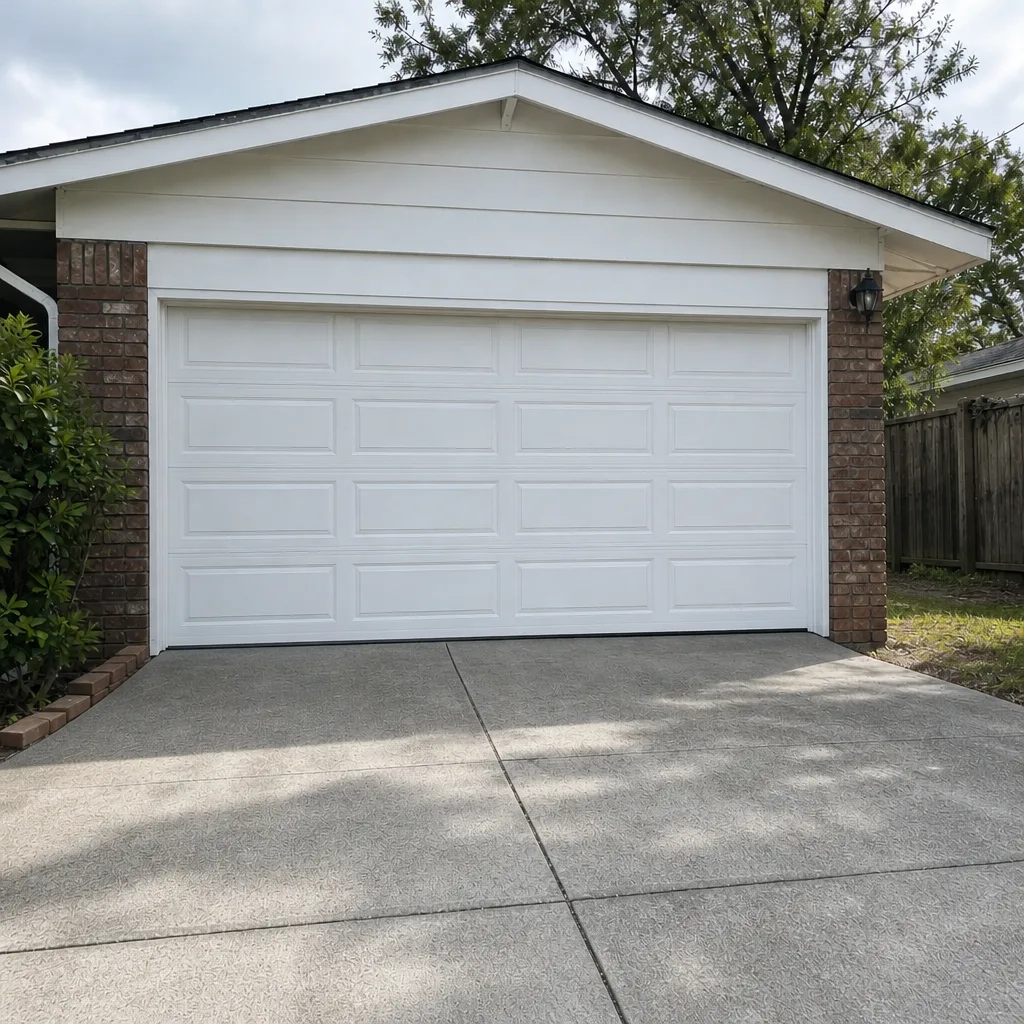 After
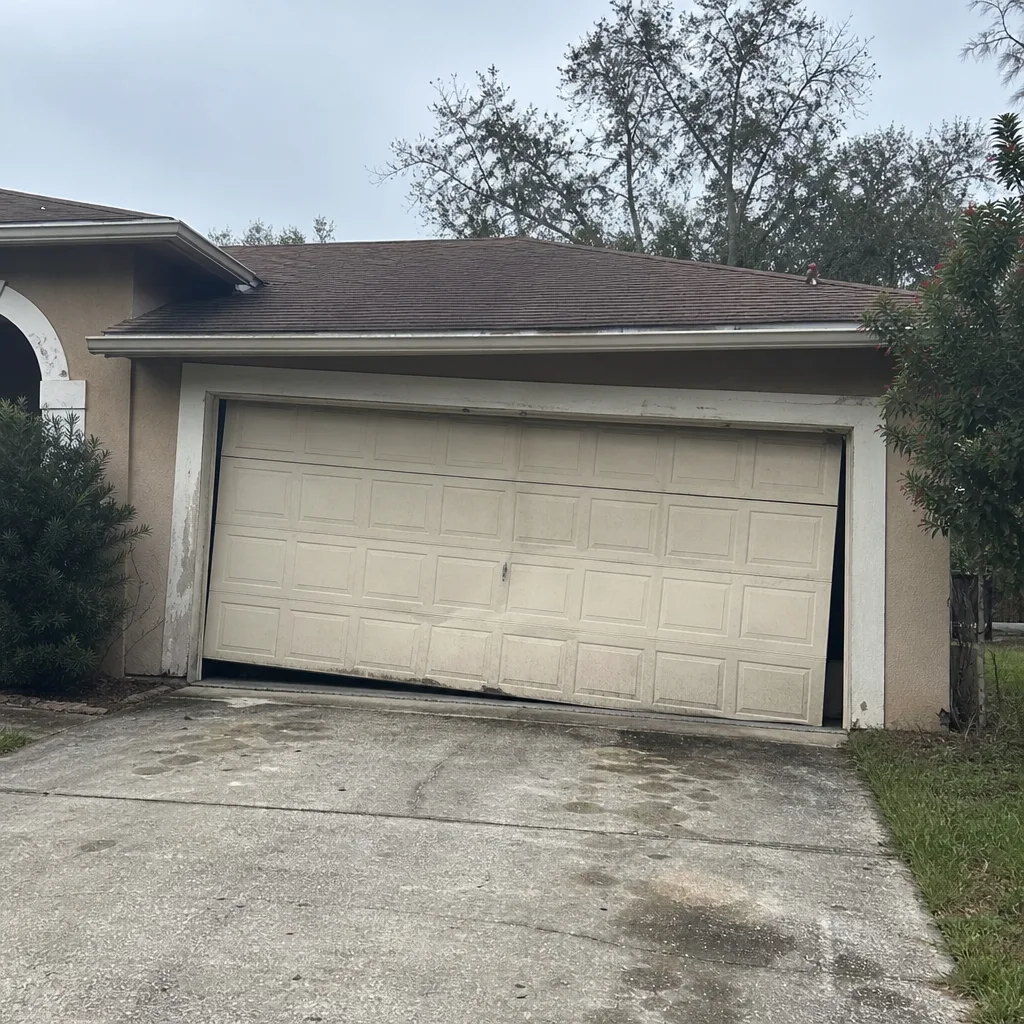 Before
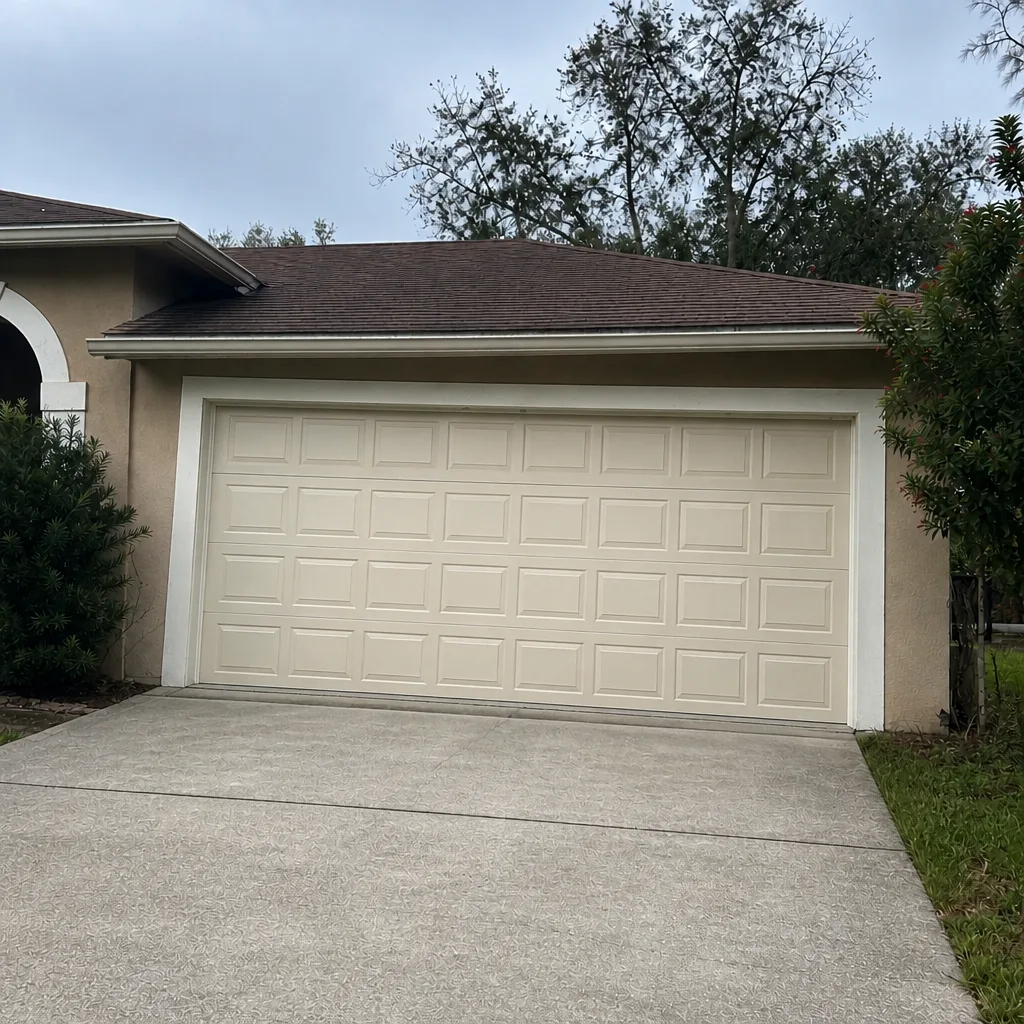 After
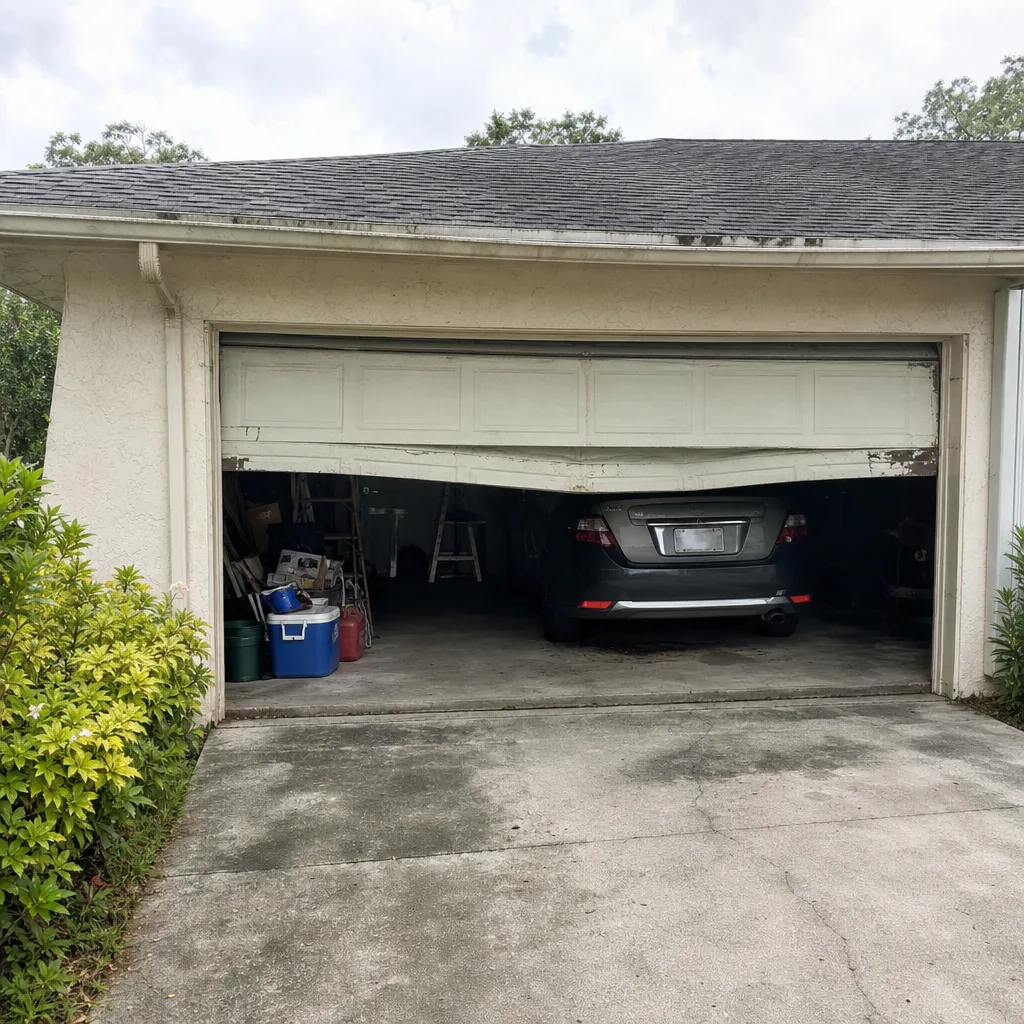 Before
 After
Common Mistakes to Avoid
- Oiling a spring and calling it done. Lubricant quiets a grinding door, but it doesn’t fix a worn roller bearing or a corroded spring. Listen again after the oil: if the grinding returns, the part is the problem, not the lubrication.
- Confusing a pop with a slam. A loud pop followed by a heavy door means a broken spring. Keep the door closed, don’t run the opener, and call for spring service. The door is now unsupported and one wrong lift can injure you.
- Replacing an opener when the door is binding. A door that reverses or hesitates is often a door problem, not a motor problem. Run the balance test before you price a new opener. A binding door will wear out a new motor the same way.
- Ignoring rust on a Riverview spring. In this climate, rusting springs can fail earlier than a homeowner expects. Light rust is a note for your next visit; flaking rust plus a gap is a stop-and-call situation.
- Using a door with a frayed cable. Cables look like rope when they fail, and a snapped cable is under enough tension to whip. Do not attempt to remove or tighten one. This is a professional repair.
- Assuming a slow door is “just age.” A door that slows down is telling you the opener or the spring is straining. Diagnose the cause instead of living with it until the door stops.
- Treating a door off its track as a quick fix. A door that’s jumped the rail can fall. Keep people and vehicles clear and call for professional service rather than forcing it back on.
When to Call a Professional
Call a professional for any of these: a broken or visibly rusted torsion spring, a frayed or kinked cable, a door off its track or hanging unevenly, a door that won’t stay balanced, and any pop or bang that leaves the door heavy. Also call when an opener reverses, hesitates, or fails to respond to both the remote and the wall button. A broken spring means the door isn’t safe to use, and it doesn’t get safer with time. Riverview Garage Door Repair Co covers spring repair, opener repair, track repair, and full door service, and we service equipment from Clopay, Amarr, Chamberlain, Genie, LiftMaster, Wayne Dalton, Craftsman, and Raynor. If your door fails outside our usual hours, call and we’ll book you for the earliest available slot, including Sundays. Riverview Garage Door Repair Co offers free estimates in Riverview. Call (866) 521-4006 and we’ll get you back up and running.
Frequently Asked Questions
A door that’s become noticeably harder to lift by hand or that won’t hold its position at waist height is usually the earliest reliable sign of a failing spring. Most homeowners notice the noise or the slowdown first, but the balance test tells you the truth faster. If the door won’t stay up, don’t run the opener; call for service and keep the door closed.
Grinding that goes away or lessens after lubricating the rollers, hinges, and spring is usually dry metal and not urgent. Grinding that continues, or that’s paired with rhythmic scraping, points to a worn bearing or a track problem and should be checked. If the sound gets louder as the door nears the top or bottom of its travel, that’s a signal to have it looked at soon. Call (866) 521-4006 if you’re not sure; estimates are free.
The warm, humid air here holds moisture against the steel coil, and garage spaces in Riverview are often warmer and stickier than the rest of the house. That humidity breaks down the spring’s protective coating, and once rust sets in, the spring weakens. Light surface rust is a warning to have the spring inspected; dark flaking rust or a visible gap means stop using the door.
Usually not. A door that reverses on the way down is most often binding in its track, and the opener’s safety reverse is doing its job by stopping. Clear obstruction from the sensor beam first; if the sensors are fine, the door itself needs inspection. A door-side repair is almost always cheaper than replacing a motor that isn’t broken.
No. Garage door cables are under extreme tension, and a failing cable can snap with enough force to cause serious injury. A cable that looks worn, kinked, or frayed is a professional repair. Keep the door closed, don’t run the opener, and call a technician. Our team handles cable and spring repairs as a dedicated service, not as a side job.
The written estimate sets the final price. We quote the job before any work starts, and the estimate you agree to is what you pay. That’s true for a simple lubrication-and-tune visit and for a full spring or track repair. Call (866) 521-4006 for a free estimate on your Riverview door.
The Bottom Line
Read a garage door the way you read a car: small sounds and small visual changes are early warnings, not background noise. Grinding usually means lubrication; scraping means track; a pop means spring; a slow door means tension or motor. The urgent signs – a spring gap, a frayed cable, a door off balance or off track – are the ones to act on immediately, while the minor ones can wait for a scheduled visit. Our technicians at Riverview Garage Door Repair Co have up to 8 years of experience and can triage any door, from a worn roller to a full new-door installation. Call (866) 521-4006 or request a free estimate and put the whole door in experienced hands.
Written by the team at Riverview Garage Door Repair Co.